
"Brahma satyam jagat mithya, jivo brahmaiva naparah"
Brahman is the only truth, the world is unreal, and there is ultimately no difference between Brahman and individual self.
-Adi Shankaracharya, Brahmajnanavalimala verse 20
"Brahma satyam jagat mithya, jivo brahmaiva naparah"
Brahman is the only truth, the world is unreal, and there is ultimately no difference between Brahman and individual self.
-Adi Shankaracharya, Brahmajnanavalimala verse 20

"A monk decides to meditate alone. Away from his monastery, he takes a boat and goes to the middle of the lake, closes his eyes and begins to meditate. After a few hours of unperturbed silence, he suddenly feels the blow of another boat hitting his.
"With his eyes still closed, he feels his anger rising and, when he opens his eyes, he is ready to shout at the boatman who dared to disturb his meditation. But when he opened his eyes, saw that it was an empty boat, not tied up, floating in the middle of the lake…
"At that moment, the monk achieves self-realization and understands that anger is within him; it simply needs to hit an external object to provoke it. After that, whenever he meets someone who irritates or provokes his anger, he remembers; the other person is just an empty boat. Anger is inside me."
-Thich Nhat Hanh

Many people are confused in thinking that enlightenment as a state implies some continuing ecstasy of bliss and awareness such as may be experienced in kensho [Japanese, “seeing one’s nature”, ie, initial enlightenment experience]. This does not appear to be a correct understanding. The fully enlightened practitioner may be said to be ‘one who lives from a perspective of a wisdom-understanding which functions without ego concern under all circumstances’. Such a realized person lives normally in the world, simply lacking habitual self-concern. He or she will have a mirror-like quality in which others see themselves, rather than seeing the reactivity of ego in the one before them. A brief enlightenment experience may be the origin of such a condition but the majority of such experiences are not followed by the persistence of an enlightened state; rather selfish vexations return but with a reduced vigor. It may be that some individuals develop a capacity to generate the experience of selfless bliss, others may find themselves there more frequently, but for most the condition is a short-term blessing. Since the experience does not ensure the emergence of the state of being an enlightened person, further practice is the essential norm.

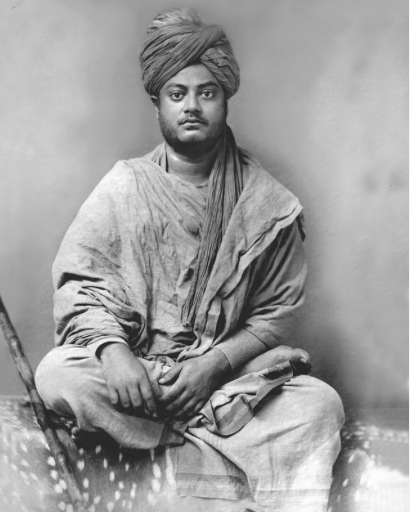
“The jñānī, according to Ramakrishna, is the traditional Advaitin who has attained the spiritual realization that the impersonal nondual Brahman alone is real and the universe is unreal. The vijñānī, however, first attains knowledge of Brahman and then achieves the even greater, and more comprehensive, realization that Brahman 'has become the universe and its living beings.' For Ramakrishna, then, both the jñānī and the vijñānī are Advaitins, since they both maintain that Brahman is the sole reality. However, while the jñānī has the acosmic realization of nondual Brahman in nirvikalpa samādhi, the vijñānī returns from the state of nirvikalpa samādhi to attain the richer, world-inclusive nondual realization that the same Brahman realized in nirvikalpa samādhi has also manifested as everything in the universe. Hence, unlike the jñānī, the vijñānī combines knowledge and devotion by worshipping everything and everyone as real manifestations of God.”
~ Swami Medhananda, Swami Vivekananda’s Vedantic Cosmopolitanism
―


Q: Is it good to devote some time to stay healthy?
Annamalai Swami: "It is difficult to do sādhana if the body is not in good condition. Hatha yoga is one way of staying healthy. Bhagavan (Ramana Maharshi) used to say, however, that of all the different āsanās, nidhidhyāsanā is the best. He would then add that nidhidhyāsanā means abidance in the Self.
"Don’t pay too much attention to the body. If you worry about the well-being of your body, you identify with it more and more. Look at it as a useful vehicle: maintain it, fuel it properly and repair if it breaks down, but don’t become attached to it. If you can keep your attention on the Self without being distracted by unpleasant bodily sensations, you are healthy enough to do sādhana. If you do your meditation earnestly and continuously you will begin to find that health problems will not distract you. When your abidance in the Self is firm and strong, you cease to be aware of the body and its pains.
"" "We must take care of the body by giving it food, shelter and clothing. This is necessary because the journey to the Self is only easy when the body is healthy. If a ship is not in need of repair, if it is in good condition, we can easily use it to go on a journey. But we should not forget the purpose for which we have been given this body."

