Monday, November 08, 2010

A MAGICAL RETREAT
What a peaceful, healing weekend it was!

The Port for Prayer is a special place that has been absorbing spiritual vibrations since the Franciscan Sisters founded it back in the 1880s. It is surrounded by St. Francis Woods and is super-shanti (peaceful).


Free time was built into the retreat. Some people got massages. Some napped. Others found a quiet spot in one of the many quiet nooks and read. Meandering walks were also popular.


It was a treat to hike in the brisk, clean air. It's so much easier to calm the mind and see God in nature.


We also saw many types of birds, including gray-and-black woodpeckers, tiny chickadees, and bright red cardinals. C. also spotted a statue-in-a-tree.


Many of the retreat attendees walked the labyrinth, which is an ancient meditation tool.


At night we tended a fire (not pictured) and gazed at the stars - and there were many because we were in the country and it was a new moon. We also heard about St. Francis of Assisi. He sounds a lot like a yogi, as he was a mystic and renunciate who helped the poor and is the patron saint of animals and the environment. J. knew all about him after reading about him at our (vegan) supper, which was conducted in mauna (silence).*


Spending the weekend immersed in the holy science of yoga is as healing for the teacher as it is for the student, if not moreso. The student, after all, is also the teacher.


We also spent some 9.5 hours chanting, discussing scripture, doing postures, and practicing breathing, concentration, meditation and relaxation in a warm, comfortable room.


It's a good thing we turned back the clocks and got an extra hour of sleep!

Still, we were tired, and the number-one requested pose on Sunday was pigeon, which has many variations.


The next retreat is March 26-27.
Mark your calendars now!


-----------------------------------------------------------------------------------------------------------------
*Legend has it that St. Francis on his deathbed thanked his donkey carrying and helping him throughout his life, and his donkey wept. Hearing this story makes me weep, too.

Thursday, November 04, 2010


SHUBA DEEPAVALI!
Happy Diwali - The Hindu Festival of Lights

There was a new student in class today. I asked her name and she said Deepa, which means "light." Before I could edit myself, the mouth said, "Happy Diwali!" with great enthusiasm.

Up on Devon Avenue this afternoon, I was saying "Shuba Deepavali" to anyone who would listen. Many did, although most said, "WHAT-T?", as they expect English (and not terribly-accented Hindi) to come out of my mouth. And then we all smiled and wished each other Happy Diwali. I ended up getting a 30-gram Lakshmi coin at the usual place - Vitha Jewelers - where we talked about the deities and how they are celebrated during the Diwali holidays. I also had a quarter-cup of chai at Annapurna, which took me straight back to India. And I realized, you don't have to be in India to enjoy India.


* * *

Friday is Diwali, the most popular holiday in India, which means, “Row of lighted lamps" - a reference to the rows of lamps that were lit to welcome the return of Lord Rama after his victory over the demon, Ravana. Or it could be the celebration of the marriage of Lakshmi with Lord Vishnu. Or, in Bengal, the festival is dedicated to the worship of Kali Ma, the dark goddess of strength. Lord Ganesha, the elephant-headed God, the symbol of auspiciousness and wisdom, is also worshiped in most Hindu homes on this day.

In Sikhism, Diwali celebrates the release from prison of the sixth guru, Guru Hargobind Ji and 52 other princes from the Gwalior Fort in 1619., which they celebrate by lighting the Golden Temple.

In Jainism, Deepawali marks Lord Mahavira attaining the eternal bliss of nirvana.

Lights are displayed to represent the importance of good over evil. Each of Diwali’s five days has special significance. The fourth day is New Years and the fifth, falling on November 7, honors siblings.


From now through Sunday, it is good to buy gold or silver Lakshmi coins (honoring the goddess of wealth) to insure wealth in the coming year. It's also a good time to make investments - as is next Wednesday.

Tonight is a good night to pray to Hanuman, the monkey god who served Lord Rama, and represents courage, loyalty and humility.

Friday night is for Saraswati, the goddess of music, knowledge, wisdom and the arts.

Wednesday is for the five deities, including Lakshmi.

Tonight, you can sing to Hanuman, do the splits (Hanumanasana) and light some candles.

And learn more here.


Tuesday, November 02, 2010

ELECTION DAY
Swing to the Right


C.K.-the-yogi knows that America, Illinois and Chicago get the politicians they deserve due to collective karma, and is not invested in the balloting process.

C.K.-the-female incarnation knows that The Man kept kept the vote from non-property owners, African Americans and women for as long as possible - which means it must have some value - and went to the polls today.

In the new neighborhood, the polling place is right across the street.

In the new neighborhood, there's no gauntlet of large, thuggish male electioneers in leather bomber jackets, "asking" you to vote for their candidate.


Apparently, it was even scarier to vote in the olden days, when the white male property owners pulled a giant, brightly-colored ballot out of the newspaper or picked it up at party headquarters, folded it up and put it under their arm and marched to the polling place. The color let people know who you were voting for (the secret ballot is a recent innovation). Oftentimes, voters got beat up before they made it to the ballot box, and some even died. Apparently, these thugs were hired by the parties to beat members of the opposition until they were too afraid to vote. And prior to paper ballots, these affluent white males got together to vote face-to-face, by tossing peas, pebbles or bullets into a hat.

Here's an excerpt from Jill Lepore's riveting New Yorker piece about this:

The word “ballot” comes from the Italian ballotta, or little ball, and a ballot often was a ball, or at least something ballish, like a pea or a pebble, or, not uncommonly, a bullet. Colonial Pennsylvanians commonly voted by tossing beans into a hat. Paper voting wasn’t meant to conceal anyone’s vote; it was just easier than counting beans. Our forebears considered casting a “secret ballot” cowardly, underhanded, and despicable; as one South Carolinian put it, voting secretly would “destroy that noble generous openness that is characteristick of an Englishman.”


You can listen to the piece here, or read the New Yorker version here.


And if you need a good laugh - and who doesn't, after this election? - check out Garry Meier's hilarious WGN-TV piece linking Halloween and the Chicago elections, here. It's well-worth clicking on the link.


Sunday, October 31, 2010

A HALLOWEEN WONDERLAND


Some of the neighbors go all-out for Halloween.

Interestingly, the majority of this amazing display - which spans the sidewalk and includes the nearby trees (not to mention the yard and front of the house, which you can't see) - didn't appear until today.


If only it worked that way with political campaign signs!

EVERY DAY IS HALLOWEEN

So many pumpkins, so little time....


Photo snapped at the pub around the corner from where I teach on Mondays and Fridays.

There were so many pumpkins they wouldn't all fit.

Saturday, October 30, 2010

WHAT TO READ AFTER GURUJI
So many books, so little time....


Grimmly turned to The Ramayana, and Boodiba is thinking about giving it shot. (I love the audio version, read by Ram Dass). I recently re-re-re-read How to Know God: The Yoga Aphorisms of Patanjai, and started on Volume One of The Upanishads. That should keep me busy for a few years.

I also like to thumb through Swami Sivananda's Self Knowledge, although it can leave me feeling a bit unworthy (hence the small doses).

Before bed, I'm re-reading Chandra Om's The Holy Science of Yoga.

But the book that's captivating me at the moment is Radhanath Swami's The Journey Home: Autobiography of an American Swami.

It combines a few of my favorite things:

Memoir + entertaining story + lessons and information about the Science of Yoga.

In other words, it is a painless, engaging read that one does not have to feel guilty about enjoying.

Plus the author is Richard Slavin, a former hippie who was born in Chicago and grew up in Highland Park before making the hellish trip overland from Europe to India, via the Middle East, in 1970. In India, he lived as a wandering renunciant, meeting a who's-who of holy people (including Mother Teresa, the Dalai Lama, S.N. Goenka, Neem Karoli Baba, Swami Satchidananada, Swami Muktananda and Ananda Mayi Ma) before committing to his Guru, ISKCON founder Swami Prabhupada.

Some of the stories are rather fantastic; I heard the swami speak at YogaNow a couple of weeks ago, and he is quite a charming raconteur.

Not that there's anything wrong with that. The lessons he learns in the book are real - and those of us on the path need all the help we can get.

Here's a brief excerpt:

"In every spiritual path, there are those who are true and those who are false. Saintliness is not determined by one's title, dress, hairstyle or place of residence. This man, for example, had the title of swami, a shaved head indicating he had renounced worldly pleasures, and the robes of a sadhu. Yet he'd tried to exploit me to satisfy his own carnal desire. Real saintliness should be understood by a person's behavior. Exerting one's spiritual authority to exploit the innocent is a grave injustice. I prayed that this incident would not create doubt in my my mind towards sincere devotees."


I'd like to submit that when it comes to saintliness, gender too is largely irrelevant.

Tuesday, October 26, 2010

OH, THE IRONY
Saw that coming....


There's been so much traffic that the metal plate has shifted to the point where it is no longer covering the pothole.

Oops!

Some cars end up hitting both the metal plate *and* getting a tire stuck in the pothole.

Some cars make a severe swerve around both.

At least it's at a jaunty angle...


Upon closer examination, it seems the pothole is indeed the tip of the iceberg, with a sinkhole below - as Dreyfus predicted.


You can see that it's already receding further, and will soon become a massive hole, capable of swallowing whole Halloween Trick-or Treaters.


In the meantime, it's a convenient place to store leaves.

Saturday, October 23, 2010

TEACHING YOGA, PART II
from Sri Nathamuni's Yogarahasya presented by Tirumalai Krishnamacharya


"Just as an idle person cannot cross the river sitting in a boat which is leaking, so too a person who follows the instructions of an ignorant teacher cannot attain moksha."


Discuss.

Wednesday, October 20, 2010

BA-DUM-DUM!
See and Hear the Famous Pothole "Repair"

Monday, October 18, 2010

AN UNHOLY RACKET
You can move away from a pothole problem.
But, like a sanskara, it is always waiting, ready to pounce.


You may recall that there was a massive pothole in front of my old apartment last year.

It was so big it became an installation, an obsession and a political statement - and eventually made it into John Kass's column in the Chicago Tribune.

You can read all about it here.

The city eventually covered the pothole with a giant metal plate - which as of yesterday is still there.


* * *


A few months ago, a small but very deep pothole appeared right in front of the new apartment.


Beneath the pothole was a huge hollow area that was far wider than its narrow, visible diameter.


The pothole stayed the same for a couple of months, never getting bigger.

And no one stuck anything in it.

Because, you see, it wasn't a menace.

Then, last Friday, there was a lot of noise in front of the building. It sounded like workers doing something.

Later, there were loud metallic thump-THUMP noises at irregular intervals.

They kept going on all evening.

They were LOUD.

Thump-THUMP. Thump-THUMP

Finally, I went out to investigate.

It seems that the workers had placed a giant metal plate over the pothole.


But they didn't nail it down.

So every time a car went over - which was often - it made a thump-THUMP noise that reverberated throughout the apartment building.

The sound went on all weekend. All day. And all night.

Thump-THUMP. Thump-THUMP.

On Saturday I called Dreyfus, and he could hear it over the phone - even though I was inside the apartment, with the window closed.

(It didn't bother me too much at night because I sleep with earplugs. Because loud neighbors can also follow you).

On Sunday I noticed that someone had placed wood shims under the plate, so that it wouldn't make as much noise.

And today I noticed this cryptic stuff...


...which is never a good sign.


Yet it did nothing to stifle the sound.

Thump-THUMP. Thump-THUMP!

(If only it went Ba-DUM-dum instead.

Now that would be funny).

Saturday, October 16, 2010

WHICH HOTEL ARE YOU?
In terms of self-care, are you the Kaveri Lodge, the Southern Star, or the Lalitha Mahal?


I was never a fan of Rosie O'Donnell until I got the current car and heard her show on satellite radio. She's hilarious and is clearly a yogi, - even though she doesn't perform the poses (for the record, most of the great yogis and saints have only performed a single asana - sitting with a straight spine).

The other day Rosie mentioned that she once heard Queen of Self Esteem Regina Wiechert speak on self-care. Wiechert asked the audience members to assess their level of self-care and said, "If your self-care were a hotel, what hotel would you be?"

(NOTE: self-care includes diet, sleep, medical care, dentistry, friendships, exercise, relaxation, spiritual path - the whole nine yards).

I used to be the Rustic Inn in Rolla, MO.

I still love the Kaveri Lodge in Mysore.

But now I'm probably the unpretentious, mid-range Curzon Court in Bangalore, with cool marble floors, cable TV, room service and A/C.

Which hotel are you?


--------------------------------------------------------------------

Photo courtesy of Travelpod.

Tuesday, October 12, 2010

OH, AM I SORE!
Paulie Zink's Taoist Yoga is Not Just Sitting and Doing Long Holds


I attended Monkey Kung Fu Master Paulie Zink's five-hour workshop at CYC on Sunday.

As expected, it was awesome.

The poses and flows are mostly different than those in Indian asana, although they are also based on animals. They are designed to get the chi (life-force) flowing and maintain health. The goal is to get in touch with one's true, primal nature and move like a monkey.

It is not Yin Yoga, although that is one aspect of it. It is Yin/Yang yoga - which requires strength, balance, and flexibility (NOTE: According to Paulie, Yin teacher Paul Grilley studied with Paulie Zink for a year and learned only one aspect of Taoist Yoga from him). Paulie does not use a timer, and is one of the most laid-back teachers I've ever encountered.

A few the poses are similar to what we do in Indian yoga. His Philosopher's Pose, in which you stand and take the arms around the legs, grab the head and look up at the anus, is the same as Dharma Mittra's Stork Pose (about which a student once came up to me after class and said, "There's no stork pose in Light on Yoga").

Dharma spent 11 years with his guru before heading out on his own. He spent many years exploring different poses and probably invented 300 or more.

Paulie spent 10 years with his guru (their sessions were all-nighters!) and spent many years exploring differeret poses and also invented scores of them.

Both have a humble, playful demeanor - despite being accomplished masters - and have inventive flows and teach several levels of student at the same time.

Which makes me feel very lucky indeed.

(Still sore, though. - although my chronic hip pain has miraculously disappeared).


Read more about Paulie here.

Friday, October 08, 2010

HAPPY NAVRATRI !
The Nine Nights of the Goddess Start Tonight
(click song at bottom to hear a wonderful Durga bhajan).


One of the reasons I love the Goddess Durga is because she slays the demon without anger or rancor; her faces remains impassive. She does it because it has to be done.

She has power and uses it wisely, but does not let it sully her.

And she is fearless.

We could learn a lot from her.


* * *

The first three days of Navratri are devoted to Durga, who destroys evil.

The second three days are devoted to Lakshmi, the goddess of wealth.

The final three days are devoted to Saraswati, who represents knowledge, music and the arts.

The Tenth Day is Dussara - which denotes the victory of truth over evil and the triumphant ovation of the soul at having attained liberation while living in this world. Dussara was the day when the Goddess Chamundi (Durga) killed the demon Mahishasura - from whom the city of Mysore gets its name.


From Swami Sivananda:


Durga Puja is the greatest Hindu festival in which God is adored as Mother. Hinduism is the only religion in the world which has emphasised to such an extent the motherhood of God. One's relationship with one's mother is the dearest and the sweetest of all human relations. Hence, it is proper to look upon God as mother....

Durga is the energy aspect of the Lord. Without Durga, Shiva has no expression and without Shiva, Durga has no existence. Shiva is the soul of Durga; Durga is identical with Shiva. Lord Shiva is only the silent witness. He is motionless, absolutely changeless. He is not affected by the cosmic play. It is Durga who does everything....

The Mother's Grace is boundless. Her mercy is illimitable; Her knowledge infinite; Her power immeasurable; Her glory ineffable; and Her splendour indescribable. She gives you material prosperity as well as spiritual freedom.

Approach Her with an open heart. Lay bare your heart to Her with frankness and humility. Be as simple as a child. Kill ruthlessly the enemies of egoism, cunningness, selfishness and crookedness. Make a total, unreserved, and ungrudging self-surrender to Her. Sing Her praise. Repeat Her Name. Worship Her with faith and unflinching devotion. Perform special worship on the Navaratri days. Navaratri is the most suitable occasion for doing intense spiritual practices. These nine days are very sacred to the Divine Mother. Plunge yourself in Her worship. Practise intense repetition of the Divine Name, having a regular "quota" of repetitions per day, and the number of hours spent on it.


Learn more about the Chicago observance of Navratri here.


Wednesday, October 06, 2010

SOUTH ASIAN FILM FESTIVAL
Remember this name: Ajay Naidu


On Saturday TiaS and I went to see the great Bengali actress and director Aparna Sen at the South Asian Film Festival.

First, though, we had to sit through Antaheen - a long-ish film set in Kolkata that stars Sen and her real-life husband, New Jersey-based English professor Kalyan Ray. The product placement (Reliance Mobile, anyone? Cafe Coffee Day? How about a Pepsi?) was distracting - it was directed by former adman Aniruddha Roy "Tony" Chowdhury - and it's nearly impossible to make an interesting film about people chatting on the internet. I would have preferred fewer cumbersome slow-mo music video numbers (when the final one started, the entire audience groaned in unison... just before they killed off the young heroine!).

This one was pretty good, though:


[Editor's note: HA! - the joke's on me. After writing this, I learned that the film's title means "The Endless Wait." Indeed!].


Afterwords, the regal Aparna Sen came out fighting and corrected the unsmiling University of Chicago film prof moderator, who described her as a "feminist" director. (I think she was offended. She is a filmmaker, period , and it reminded me of when people called Spike Lee "the black Woody Allen." Um, no, he's a filmmaker, period).


Aparna Sen's new film, The Japanese Wife, was screened the following day. She also directed one of my favorites, 36 Chowringee Lane (which stars Jennifer Kendal and was produced by her husband, Shashi Kapoor!), and 2003's Mr. and Mrs. Iyer. The questions from the audience were good, although people kept trying to get her to say that her films were better than the one we'd just seen. she didn't take the bait. She said it's hard to get funding these days, and that product placement is a necessary evil. She also said, "It's an exciting time for Bollywood. All kinds of subjects are being explored - it is no longer a boy-meets-girl or running-around-the trees story." We also learned that films about rural lives are not popular in Indian cinema (although this does not seem to be true in South India; plus, female director Anusha Rizvi's new Hindi farmer suicide black comedy Peepli Live is has been selected to represent Indian cinema in the Best Foreign Language Film category at this year's Academy Awards (it probably helped that the big-time Hindi film actor Aamir Khan has attached his name to the project).

Afterwords, TiaS and I dined on veg. biryani and curry, and talked about whether we could sneak into the next film - Ashes, which was getting its US premiere and was sold out before we arrived. It's directed by and stars Evanston, Illinois native Ajay Naidu - who attended film school at Columbia College for two years. It's the film we really wanted to see, since it's Naidu's directorial debut and had an interesting premise, - focusing on "two brothers whose lives are unraveling. As one brother plummets deeper into mental illness, the other, Ashes, copes by throwing himself into the drug-dealing community that consumes him."

We were finishing our meal and talking about yoga, yoga, yoga, yoga and yoga when a man with an official-looking ID badge dangling from his neck asked if we were interested seeing in Ashes. You bet! We said. He said it looked like there were a few seats left, and asked if we wanted them. We did.


The film was as alive, vibrant and heartfelt as the previous one was not. The score was visceral and unsentimental (as the other was not), with original music from the likes of Talvin Singh and Karsh Kale. I was pulled in from the start, and it kept me there the entire time. The relationships were believable, the acting and writing were great and so was the editing, directing and photography. It was awesome - especially the acting and directing - and at the end even I was crying.


Afterwords Ajay (whom you may know from Office Space, and The West Wing) and his producer and female lead came out to talk about the film. He said that he wanted to shoot in Chicago and spent seven years trying to make it happen here. But all of his crew, etc. was in New York. Once he realized it had to be shot in NYC (Queens, actually), he was shooting within a week.

He said that the stories - about an elder, bi-polar brother with Schizophrenia (I think) and his younger, drug-dealing brother came from real life and the events all really happened - "only not in that order." You could tell that he was speaking from the heart - both during the film and after. He said he hoped the film would serve as a catalyst for people to discuss that which is taboo in the South Asian community - mental illness and suicide - and bring it out into the open. He also said that the title comes from the ashes the saddhus (holy men) in India smear on their bodies. (BTW, his fiancee and high school sweetheart, Heather Burns, played the bad girl).

I pray he gets into the film festivals, finds a distributor with deep pockets, and that everyone gets to see it.

And then I hope they give him a big, fat budget for his next film.


Read the Times of India's take on the fest here.

Monday, October 04, 2010

SMART PHONES AND YOGA: MUTUALLY EXCLUSIVE?
The ringer may be off, but the phone's still on....


See in Class This Week:

-Student sending and receiving text messages

-Student checking football scores

-Teacher telling student such behavior is "distracting" and "frowned upon."

Tuesday, September 28, 2010

RETREAT TIME
November 6-7


I'm holding a yoga and meditation retreat from November 6-7 at the Portuincula Center for Prayer in Frankfort, Illinois - about 36 miles southwest of Chicago.

This is a super-shanti (peaceful) place, located in the middle of St. Francis Woods.


This retreat will focus on the eight limbs of yoga, including the ethical roots, scriptural study, pranayama (breathing), concentration, and direction towards the true goal of yoga - which is settle the mind into silence so that we can discover our true, peaceful nature. It will include Dharma Mittra's special Psychic Development practice, which will put power behind your thoughts. We will also chant and do plenty of postures!

Saturday evening’s session will end with Yoga Nidra, or deep relaxation – which Sri Dharma Mittra calls the greatest antidote to impurities. And then we'll sleep an extra hour, because this is the weekend that we turn back the clocks! On Sunday we will do a special Maha Sadhana - the one great eternal yoga practice - followed by a gourmet vegetarian lunch.


Suitable for all levels, this retreat starts Saturday at 9AM and ends Sunday at 1PM . It is perfect for those who wish to deepen their yoga practice and heal the body, mind and spirit.

In addition to the yoga practices, you can walk a sacred labyrinth in this magical, meditative setting (a labyrinth is an ancient meditation tool that can induce a receptive state of consciousness).


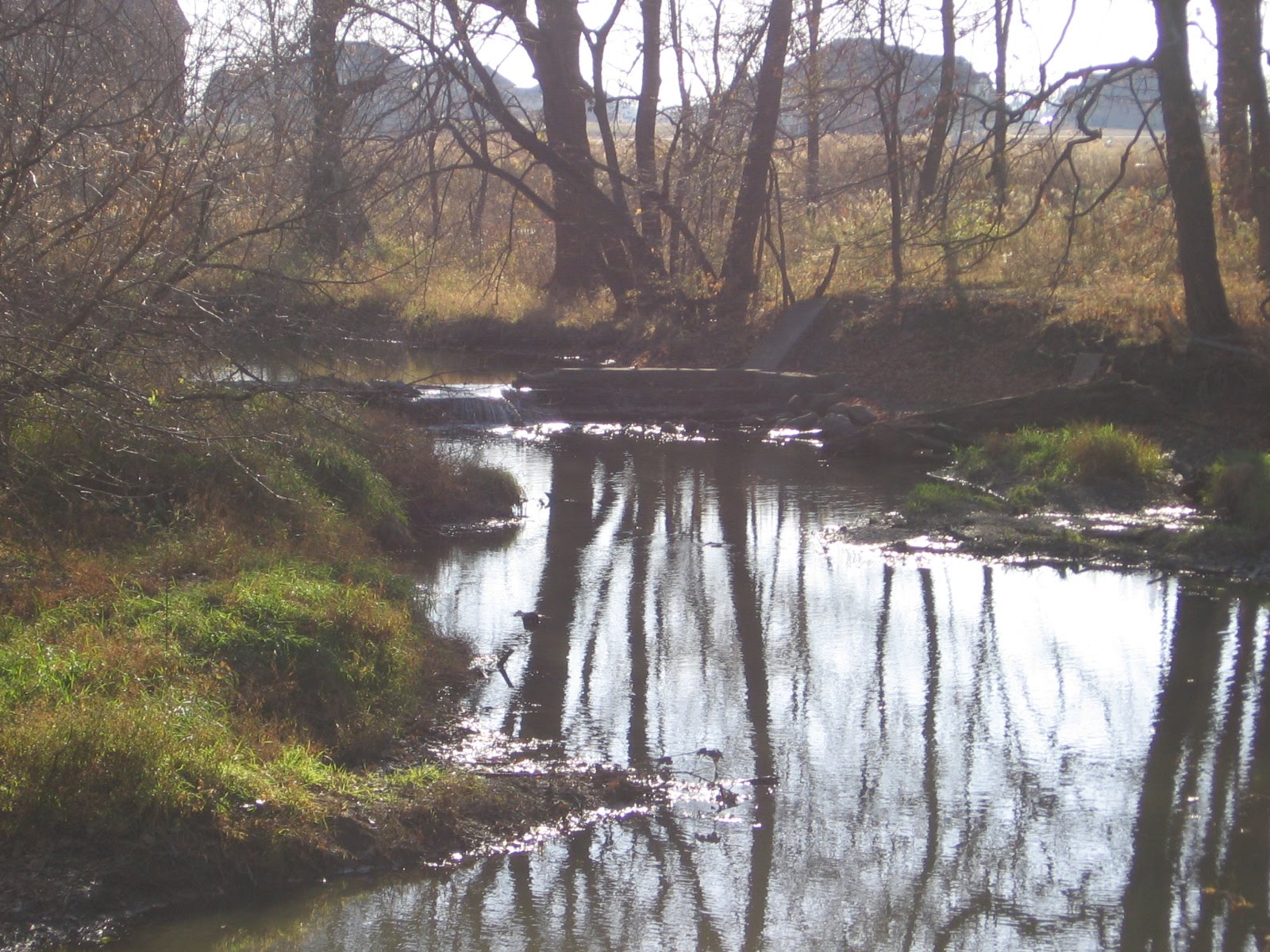
The 50-acre campus also includes peaceful sitting areas, grassy knolls, fountains, a creek, and hiking trails.

Cost for the one-night retreat (including lodging, vegetarian meals and instruction) is $175 for a private, single room. All rooms use a shared bath. After October 1, the price is $225.

Click here for more.


Friday, September 24, 2010

MISSING FROM THE GURUJI BOOK
Indian Students From the Early Days


The book contains only a few.

Here's - yes! - one more:


This is from my 2009 interview with Dr. R. Chandrasekhara, who practiced with Guruji in the 1960s and later moved to the Chicago suburbs:

“I started learning yoga in 1960 after a friend of mine introduced me to my guru, Shree Pattabhi Jois. I started on a Vijaya Dashami [Dasara Festival] day and spent seven years before I had to come to USA. “I started studying with him at the Sanskrit College (1960) then continued from ‘63 to ‘67 at his house in Lakshmipuram. He treated me as his son, and I became extended family.

“We had to practice on a bare floor because the Sanskrit College did not provide any carpet. We used one towel. Later, we all contributed for the prison inmates to weave a coconut coir carpet.

“His hands-on teaching was exemplary. He taught from 5 a.m. till 9 a.m. and again from 5 p.m. to 9 p.m. tirelessly. He shaped the student’s body to perfection. He taught me well, and I mastered in three years. We gave one demonstration first of a kind in my home town (Holenarasipur) during Ganesha festival. We did not have any camera to take pictures. After he retired, he moved to Lakshmipuram location.

“Steadily the number of students increased, both local and from abroad. He taught me free because I was a student without any income, and I was one of the family. Adjectives fail to describe his magnanimity--always smiling and had profound knowledge of Patanjali’s system. His wife had the same name as my mother (Savitramma) and always made very good coffee for me. It was a devastating blow for him when she suddenly passed away....I happened to visit him to invite him my son’s wedding around the time his wife passed away. I attended his wife’s death ceremony, and he was very gracious to attend my son’s wedding.

“He paid a visit in Illinois when he made his first trip to USA [in 1975]. After much persuasion, he wrote Yoga Mala. We all helped in publishing. Even though I pushed him to write intermediate and advanced asanas, and Patanjali’s book, plus the Tibetan medicine he learnt from his guru Shree Krishnamacharya at Manas Sarovar, he did not complete.

“He has left a legacy of students to carry on his mission. May his soul ultimately merge in the universal soul.”

Tuesday, September 21, 2010

INDIA INVADES THE WINDY CITY
Just in Time for Autumn


I.
Tonight (Tuesday 9/21) at 6pm, the great tabla virtuoso Zakir Hussain kick off the annual World Music Festival with a free concert at the city's finest outdoor venue - Millennium Park. It is not to be missed.

The concert also kicks off a three-day festival-within-a-festival called India Calling! which includes concerts and of opportunities to purchase Indian handicrafts at an exhibition-cum-sale.


II.
The Merchants of Bollywood music-and-dance extravaganza comes to the beautiful, Louis Sullivan-designed Auditorium Theatre October 1 and 2. The show features 50 performers, 500 costumes, and "3000 pieces of glittering jewelry." I dare you not to be dazzled (see a sample, above).


III.
The first-ever Chicago South Asian Film Festival hits town October 1-3 with 16 films you probably haven't seen before, including the Chicago premiere of Deepti Naval's "Two Paise for Sunshine, Four Aanas For Rain," starring Manisha Koirala, Rajit Kapoor and Sanaj Naval - who are slated to appear in person. But I'm far more interested in Chicago native Ajay Naidu's directorial debut "Ashes."

Monday, September 20, 2010

SMASH 'N' GRAB
Life and Yoga in the Big, Bad City


A student sent me this story today:

I got to my car this morning for my drive to work and saw that someone had broken into it. The entire front passenger side window was smashed with shattered glass everywhere. One of my neighbors saw the guy do it and said he ran off with a big bag. I don't leave anything of value in my car since I have to park on the street, so I couldn't think of what it possibly could have been.

And then I realized.... the robber took off with my yoga bag and now has a 3-year-old Manduka mat that he's lugging around the city! Clearly, he needs it more than I do. Maybe it will help him to find some inner peace!

Cost to fix window = $91.

Cost to fix his soul= priceless.

Thursday, September 16, 2010

TEACHING YOGA, PT I


Students often approach me and ask my advice about various *teacher training* programs. They are usually overwhelmed by the range of options.

Sometimes, the student does not have a strong yoga practice / does not attend classes regularly.

At that point I say,

"Why do you want to take a yoga teacher training program?"

Sometimes, it's for deeper studies.

Other times, it's because they want to teach yoga.

Not that there's anything wrong with that.

But there have been more inquiries ever since the Chicago Tribune published an article saying the average yoga teacher here earns over $50,000 a year. That's one of the best jokes I've ever read.

More important than money is to have a passion for it, as Lino says.

Here is one of my favorite quotes from Chandra Om, one of the truest yogis I've ever met:

“Teaching yoga is not part-time, it’s not a profession, it’s not a business and it’s not logos.

“You cannot teach what you have not personally experienced. You cannot teach spiritual knowledge unless you have some yourself. You cannot straighten out another until you have straightened yourself, so you really have something to say. Teaching is information passing through you--that’s why it’s not about you, or your personality. You’re transmitting your personal environment. Once you’ve cleaned up your own self, you give up your personality and ego and who you think you are, so God can pass through you and use you, so your lower self does not get in the way.”


I would add that one should also have mastered the basic postures.

Sunday, September 12, 2010

BUGS ARE PEOPLE, TOO
Ahimsa (non-harming) also applies to the insects


Dharma says the Indweller or Atman is the same in all living beings - even the insects.

He often quotes the Buddha, who said that all beings love life.

Dharma says they are just like us, and want to be left alone to raise a family.

(Hopefully, not in your kitchen).


Now, we have actual proof - from this "News Sparker" in Thursday's Star of Mysore newspaper:


BUGS HAVE PERSONALITIES

Washington: Scientists from from University of Debrecen have revealed that bugs may all look alike to human eyes, but they have their own, unique personalities. Some individual bugs, like humans, turn out to be shy, while others are very forceful. Boldness, activeness, and aggressiveness are the main personality traits that were measured as these bugs connect to each other and appear together.


Think about that the next time you decide to kill one....

If you're a real yogi, you'll realize you'd only be killing yourSelf.

Saturday, September 11, 2010

HAPPY GANESH CHATURTHI!


From CK, QE and Princess Sanbooty


Mushikavaahana modaka hastha,
Chaamara karna vilambitha sutra,
Vaamana rupa maheshwara putra,
Vighna vinaayaka paada namasthe


"O Lord Vinayaka! the remover of all obstacles, the son of Lord Shiva, with a form which is very short, with mouse as Thy vehicle, with sweet pudding in hand, with wide ears and long hanging trunk, I prostrate at Thy lotus-like Feet!"


Click here to learn how Ganesh (Vinayaka) got his elephant head.

Thursday, September 09, 2010

THE THREE 9/11s
Pattabhi, Ganesh and Swami Vivekananda


I.
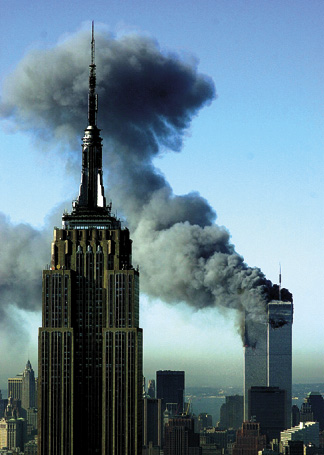
We all know that Saturday is the ninth anniversary of the 9/11 attacks on the World Trade Center and Pentagon. I was at Pattabhi Jois's workshop at NYC's Chelsea Piers that morning. Here's an excerpt from my Chicago Reader article about being stuck in the orange zone between 14th Street and Houston, with nothing coming in except acrid white smoke:


Last night the roommate brought the day's paper from The Other Side, which was a treat. It was the Daily News but the whole thing was about the WTC and I couldn't put it down.

Got up at five to try to make it to yoga, which was supposed to be in SoHo at the Puck Building today. It's still closed, so it's being held at Eddie Stern's studio. Before I left I watched some Channel Two of course. People are now bringing in the toothbrushes and hairbrushes of missing loved ones for identification purposes. The anchors had changed places again. During the walk the city was quiet, quiet, quiet, except for Sixth Ave, which had a lot of what seemed to be nonemergency vehicles. Somehow everyone had managed to hose the dog urine off the sidewalks, which were still wet. Instead of the WTC there was a white glow telling me which way was south.

Houston was still barricaded. I took Crosby over and walked right up to one of the police officers (by the way, they tend to be thin here). I explained that I was trying to go to a yoga workshop, and it worked! After a bit of hesitation he let me go. Maybe he was tired. Behind me I heard, "We're in!" from someone also carrying a yoga mat. She was wearing a dust mask and walked in the street "because of the rats." Garbage hasn't been picked up in a while and is piling up everywhere. At least the wind has changed direction; maybe we can open the windows today.

There were about 40 people at yoga; I didn't see anyone else from Chicago. Most seemed to be from the area (including Willem and Gwynneth, natch). The woman checking people in was on the phone, telling the person on the other end that she couldn't help them get across Houston. No one talked before class, which was unusual. During practice Guruji didn't make a single joke; he was businesslike and class went quickly. I was distracted, weak, and stiff and had no balance. We heard more sirens than usual. Before savasana, we were told to call after 11:30 to find out if/​where we will practice on Thursday. Only about 15 people had shown up for the 7:30 class when I left at 7:40. One of the students was telling someone, "If it were just the bad smell, that would be one thing...."


Read the rest here.


II.
Saturday is also the start of Ganesh Chaturthi, a 10-day festival celebrating the birth of Lord Ganesh, who is the remover of obstacles and represents prosperity and good fortune. Families install clay symbols of Ganesh at home or in temporary structures, and pujas are performed. On Day 11, the statue is taken through the streets in a procession accompanied by singing and dancing. Then it is immersed in a river or the sea, symbolizing a ritual see-off of the Lord in his journey towards His abode in Kailash (where His father, Lord Shiva lives). It is said that He takes with Him the misfortunes of His devotees.

The festival is being celebrated all week at Eddie Stern's NYC shala. His shala is where we practiced right after 9/11, and is now a full-fledged Ganesh Temple. On Friday at 6:30, Srivatsa Ramaswami will join the pujas and give a lecture on the meaning and use of mantra and ritual. Click here for the complete schedule.


III.
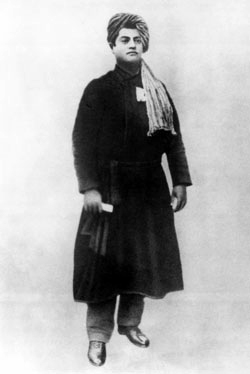
September 11 is also the anniversary of the day yoga arrived in America, when Swami Vivekananda made his famous speech at the 1893 World Parliament of Religions in Chicago.

His rousing speech is the foundation of Jitish Kallat's new installation, "Public Notice 3" at the Art Institute of Chicago.

Swami Vivekananda, who stunned and enthralled the audience of 7,000 with an address that opened one of the first dialogues between Eastern and Western traditions and, importantly, argued passionately for universalism and religious tolerance. Exactly 108 years before the attacks in New York City and Washington, DC, Swami Vivekananda called for an end to all "bigotry and fanaticism" and pleaded for brotherhood across all faiths, a speech that was met with a standing ovation and was heralded by journalists as one of the pivotal moments of the Exposition. (Even today, the stretch of Michigan Avenue in front of the Art Institute is the honorary "Swami Vivekananda Way.")

Kallat has converted the complete text of Vivekananda's inspiring speech into LED displays on each of the 118 risers of the museum's Woman's Board Grand Staircase, which is itself adjacent to what is now Fullerton Hall, where Vivekananda made his original presentation. Drawing attention to the great chasm between this plea for tolerance of 1893 and the very different events of September 11, 2001, the text of the speech will be displayed in the five colors of the United States' Department of Homeland Security alert system--red, orange, yellow, blue, and green.

This historical coincidence--and the fact that the speech was delivered at the earliest attempt to create a global dialogue of faiths--heightens the potency of Vivekananda's persuasive words. The resulting work, Public Notice 3, creates a trenchant commentary on the evolution, or devolution, of religious tolerance across the 20th and 21st centuries. The installation will serve not as a passive commemorative act but rather as an actively contemplative space.


This is Bombay-born Kallat's first major American exhibit, and will be on display through January 2. Click here for more.


Here's an excerpt from Swami Vivekananda's opening speech - which was greeted with thunderous applause:

I am proud to belong to a religion which has taught the world both tolerance and universal acceptance. We believe not only in universal toleration, but we accept all religions as true. I am proud to belong to a nation which has sheltered the persecuted and the refugees of all religions and all nations of the earth. I am proud to tell you that we have gathered in our bosom the purest remnant of the Israelites, who came to Southern India and took refuge with us in the very year in which their holy temple was shattered to pieces by Roman tyranny. I am proud to belong to the religion which has sheltered and is still fostering the remnant of the grand Zoroastrian nation.

I will quote to you, brethren, a few lines from a hymn which I remember to have repeated from my earliest boyhood, which is every day repeated by millions of human beings: "As the different streams having their sources in different places all mingle their water in the sea, so, O Lord, the different paths which men take through different tendencies, various though they appear, crooked or straight, all lead to Thee."

The present convention, which is one of the most august assemblies ever held, is in itself a vindication, a declaration to the world of the wonderful doctrine preached in the Gita: "Whosoever comes to Me, through whatsoever form, I reach him; all men are struggling through paths which in the end lead to Me."


Sectarianism, bigotry, and its horrible descendant, fanaticism, have long possessed this beautiful earth. They have filled the earth with violence, drenched it often and often with human blood, destroyed civilization and sent whole nations to despair. Had it not been for these horrible demons, human society would be far more advanced than it is now.

But their time is come. And I fervently hope that the bell that tolled this morning in honor of this convention may be the death-knell of all fanaticism, of all persecutions with the sword or with the pen, and of all uncharitable feelings between persons wending their way to the same goal.


Read the rest here. Or hear the original recording of Swami Vivekananda - who possessed a lovely, cultured voice and usually spoke off-the-cuff - here. Hearing him brings tears to the eyes.


Monday, September 06, 2010

REMEMBERING SWAMI BUA


My 2006 article about the late Swami Bua was recently reprinted by All Things Healing.

An excerpt:

Afterwards he had me sit in a chair in front of him and asked me if I had any problems. Unable to narrow it down to just one or two, I shrugged, smiled and said, “Not really.” Besides, it felt like enough just to be in his presence. He gave me a tour of some of the pictures of him. He said he could stop his pulse, which I wholeheartedly believe. He’s also supposed to be able to swallow his tongue--a kriya [cleansing] technique.

At one point, he looked at me and said, “You are a good girl. You are a good person.” That’s never a bad thing to hear from anyone--especially a yogi with that much wisdom.

But I already felt an intense sense of well-being even before he said that.


Read the rest here.


On the day I took that afternoon class with Swami Bua, I did primary series in the morning with Pattabhi Jois (details here). That same evening, I went with Catesey to see The New York Dolls play their last gig at CBGB (details here).

Now that was livin'....

until the next day, when I became quite ill indeed.

Saturday, September 04, 2010

PUNK NOT DEAD
Well, for some of us it is


Sri Dharma Mittra
in London last month. Can you figure out which is the real rebel? (HINT: It's probably not the ones searching for the Atman).


Sri Dharma in NYC, circa 1984 (from his famous poster)


CK in Minneapolis, circa 1986 (from her famous rebellion)


-------

-Photo of Sri Dharma in London by Hugh Herrera (c) 2010
-Photo of Sri Dharma in NYC by Dharma Mittra (c) 1984. (This photo reminds me of the Greek medical symbol -- and the nadis of course).
-Photo of CK (c) 1986 by Tony Retkowski, from Tusitala magazine

Thursday, September 02, 2010


TO JALANDHARA BANDA, OR NOT TO JALANDHARA BANDHA?
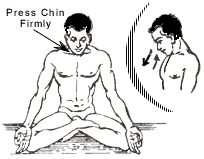


In April, senior ashtanga teacher Lino Miele told us that in the ashtanga vinyasa yoga system, Jalandhara Bandha (the chin-lock) is not used during the asana (posture) portion of practice. He said that it is only used for pranayama (breathing). “There are a few things that Guruji [Sri K. Pattabhi Jois] was very particular to teach,” he said. “This is how I know if it came from him or somewhere else.

“Once the guru dies, everyone goes like this,” he said, spreading out his arms. “I don't want to go like this.”

In August, David Williams (the first American to study with Pattabhi Jois) took me aside before his workshop, and told me that he liked my article about Lino, but that it was wrong when it came to Jalandhara Bandha. He said that the chin-lock is done in every pose. He had a text by Sri Tirumalai Krishnamacharya (the guru of Pattabhi Jois) to back him up. It said, "When I explain the rules of yogasana [yoga postures], if the position of the head has not been specified, then keep the head in jalandhara bandha."

I said to DW that the correct response would be to write a letter to the editor. DW said he did not want to pursue it. I said that ashtanga is interesting that way; in April, Lino Miele said that Mula Bandha (the root lock) means to pull up the anus. From my Yoga Chicago article:

When he was writing the books with Guruji (they also completed a book on advanced A and B series, which has not yet been published), Lino said he brought in some other yoga books, and told Guruji he was confused about mula bandha. “Gurji threw away the books. He said, ‘I am the book. You and I are writing the book, and you go to other books?'

“OK, Guruji--but where is mula bandha?”

“‘The anus.'”


I told DW that a month later, Tim Miller (the first American certified to teach the ashtanga system) came to town and told us that Mula Bandha does not mean to pull up the anus. From my article in the September/October Yoga Chicago, which is not yet online:

Tim began “The Mysterious and Elusive Bandhas” by explaining, “mula bandha [root lock] doesn’t mean to contract your anus.” Instead, the action involves lifting the tailbone towards the pubic bone.

I told DW that I found the differences rather amusing.

As for the chin-lock, I recalled that the old pictures of Pattabhi Jois show him doing something like it in the seated forward bends (one year, David Roche, who is a certified teacher *and* a big-time mixer, came to town and had us do all the poses old-school like that. It felt good on the back, and it was easier to catch the bottom two locks. But it did not feel right).


I figured that at some point, it shifted to from chin-to-chest to chin-to-shin in the seated forward bends, with eyes towards the feet.


What I didn't say was that at some point these debates are a bit like the war over which side to open the hard-boiled egg on in the Lilliput section of Gulliver's Travels.


After my discussion with David W, I attended his led primary series workshop at his invitation. He had the students do Jalandhara Bandha in each and every pose.

The following week, the regular Mysore students were still practicing that way, and we had a discussion. I said that the reason for many differences is that Guruji's teachings evolved over the years. (What I did not say is that many differences are due to younger / newer / careless instructors teaching incorrectly, which is a whole 'nother post). I said that I tend to go with my own 12 months of experience with Guruji and what Lino says, since he spent so much time with Guruji trying to get everything straight. After all, how can you look at your foot (the correct dristi, or gaze, in most seated forward bends) if your chin is at your chest? I suggested they find some sort of middle way: neck neutral, eyes towards feet, forehead relaxed. But when I practice, I do chin-to-shin.

On Tuesday, I found Jason Stein's notes from a July 28, 2004 conference with Guruji and Sharath in Mysore:

"Jalandhara bandha is only to be engaged during pranayama, not during asana practice."

Straight from the Guru. To Jason. To you.

Although Jason adds a caveat:

"Take as gospel at your own risk."