Wednesday, September 07, 2005


RIGHT IN OUR OWN BACKYARD

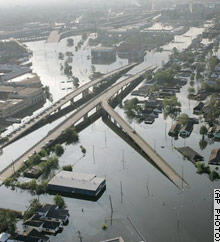
Our friend Munkin's sister fled New Orleans with her husband, who works at Tulane University, and two small children. Their house is next to one of the levees that broke, in a neighborhood called Lakeview. They've been living in Munkin's basement for several days.

But due to the graciousness of my neighbor and his new wife, they will soon be moving into a fairly-decent one-bedroom apartment that's just around the corner from Joan Cusack, and equidistant to a playground. They'll stay for the next few months; apparently Tulane plans to have a spring semester. During the walk-through - the two-year-old was enchanted with the staircase -- the husband mentioned that so many people have flooded Baton Rouge that the entire city is out of key blanks.


Afterwords we had lunch at the Southern/Cajun Wishbone restaurant (the two-year-old was craving red beans and rice and jambalaya). We all laughed as the husband regaled us with headlines from the latest edition of The Onion:

God Outdoes Terrorists Yet Again


Louisiana National Guard Offers Help By Phone From Iraq

Government Relief Workers Mosey In To Help
FEMA representatives call out to survivors, "Show us your tits for emergency rations!"


Refugees Moved From Sewage-Contaminated Superdome To Hellhole Of Houston
HOUSTON—Evacuees from the overheated, filth-encrusted wreckage of the New Orleans Superdome were bussed to the humid, 110-degree August heat and polluted air of Houston last week, in a move that many are resisting.

White Foragers Report Threat Of Black Looters
NEW ORLEANS—Throughout the Gulf Coast, Caucasian suburbanites attempting to gather food and drink in the shattered wreckage of shopping districts have reported seeing African­Americans "looting snacks and beer from damaged businesses."

Another Saints Season Ruined Before It Begins
NEW ORLEANS—Front-office executives of the New Orleans Saints football team provided a much-needed dose of normalcy Monday when they announced that, for the 23rd year running, the Saints season had been ruined before it began.

Shrimp Joint Now Shrimp Habitat
NEW ORLEANS—Big Etienne's, a popular stop for New Orleans-style jambalaya, shrimp po' boys, and gumbo, has become a near-perfect habitat for Penaeus setiferus, the ubiquitous white shrimp used in jambalaya, shrimp po' boys, and gumbo.

Bush Urges Victims To Gnaw On Bootstraps For Sustenance
WASHINGTON, DC—In an emergency White House address Sunday, President Bush urged all people dying from several days without food and water in New Orleans to "tap into the American entrepreneurial spirit" and gnaw on their own bootstraps for sustenance. "Government handouts are not the answer," Bush said.


**************************************


SISTERS ARE DOIN' IT(YET) AGAIN

It seems that women are doing some of the most thoughtful and incisive writing about the Disaster -- which only make sense when you consider that we must work twice as hard and be twice as smart as our male competitors. Apparently our headshots must also be twice as glamorous.


September 7, 2005
Haunted by Hesitation
By MAUREEN DOWD
WASHINGTON

It took a while, but the president finally figured out a response to the destruction of New Orleans.

Later this week (no point rushing things) W. is dispatching Dick Cheney to the rancid lake that was a romantic city. The vice president has at long last lumbered back from a Wyoming vacation, and, reportedly, from shopping for a $2.9 million waterfront estate in St. Michael's, a retreat in the Chesapeake Bay where Rummy has a weekend home, where "Wedding Crashers" was filmed and where rich lobbyists hunt.

Maybe Mr. Cheney is going down to New Orleans to hunt looters. Or to make sure that Halliburton's lucrative contract to rebuild the city is watertight. Or maybe, since former Senator John Breaux of Louisiana described the shattered parish as "Baghdad under water," the vice president plans to take his pal Ahmad Chalabi along for a consultation on destroying minority rights.

The water that breached the New Orleans levees and left a million people homeless and jobless has also breached the White House defenses. Reality has come flooding in. Since 9/11, the Bush administration has been remarkably successful at blowing off "the reality-based community," as it derisively calls the press.

But now, when W., Mr. Cheney, Laura, Rummy, Gen. Richard Myers, Michael Chertoff and the rest of the gang tell us everything's under control, our cities are safe, stay the course - who believes them?

This time we can actually see the bodies.

As the water recedes, more and more decaying bodies will testify to the callous and stumblebum administration response to Katrina's rout of 90,000 square miles of the South.

The Bush administration bungled the Iraq occupation, arrogantly throwing away State Department occupation plans and C.I.A. insurgency warnings. But the human toll of those mistakes has not been as viscerally evident because the White House pulled a curtain over the bodies: the president has avoided the funerals of soldiers, and the Pentagon has censored the coffins of the dead coming home and never acknowledges the number of Iraqi civilians killed.

But this time, the bodies of those who might have been saved between Monday and Friday, when the president failed to rush the necessary resources to a disaster that his own general describes as "biblical," or even send in the 82nd Airborne, are floating up in front of our eyes.

New Orleans's literary lore and tourist lure was its fascination with the dead and undead, its lavish annual Halloween party, its famous above-ground cemeteries, its love of vampires and voodoo and zombies. But now that the city is decimated, reeking with unnecessary death and destruction, the restless spirits of New Orleans will haunt the White House.

The administration's foreign policy is entirely constructed around American self-love - the idea that the U.S. is superior, that we are the model everyone looks up to, that everyone in the world wants what we have.

But when people around the world look at Iraq, they don't see freedom. They see chaos and sectarian hatred. And when they look at New Orleans, they see glaring incompetence and racial injustice, where the rich white people were saved and the poor black people were left to die hideous deaths. They see some conservatives blaming the poor for not saving themselves. So much for W.'s "culture of life."

The president won re-election because he said that the war in Iraq and the Homeland Security Department would make us safer. Hogwash.

W.'s 2004 convention was staged like "The Magnificent Seven" with the Republicans' swaggering tough guys - from Rudy Giuliani to Arnold Schwarzenegger to John McCain - riding in to save an embattled town.

These were the steely-eyed gunslingers we needed to protect us, they said, not those sissified girlie-men Democrats. But now it turns out that W. can't save the town, not even from hurricane damage that everyone has been predicting for years, much less from unpredictable terrorists.

His campaigns presented the arc of his life story as that of a man who stumbled around until he was 40, then found himself and developed a laserlike focus.

But now that the people of New Orleans need an ark, we have to question the president's arc. He's stumbling in Iraq and he's stumbling on Katrina.

Let's play the blame game: the man who benefited more than anyone in history from safety nets set up by family did not bother to provide one for those who lost their families.

E-mail: liberties@nytimes.com


Copyright 2005 The New York Times Company

Monday, September 05, 2005


TREATED LIKE DOGS

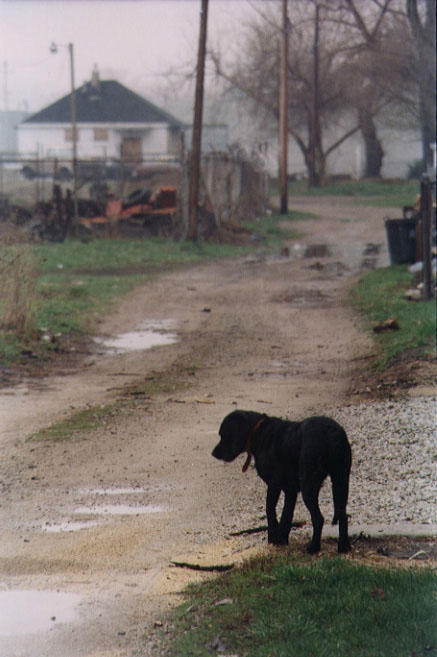
My mother often said she preferred animals to humans. She had a point....


Some of the people in New Orleans couldn't leave, while others chose to stay. The animals didn't have a choice, and James Janeg's article by about the Superdome evactuation in yesterday's Chicago Tribune makes me feel a bit ill (and I don't even like dogs that much):

"People, we got to be moving," Sgt. 1st Class Michael Glenn said through a bullhorn. "You see the fence. You've got to be on the other side of the fence."

Angry faces in the crowd glared at him, but moved on. A cursing man in a purple hat stayed behind until five Guardsmen towering around him convinced him to go. Weary families hobbled out together. Dogs were not allowed, and were left behind, tied under tables in front of a ticket counter.

No one knew what to do with the dogs, some of which ran free. A few Guardsmen poured water into popcorn containers for them, but many of the animals looked beyond help.

Lt. A.J. Ylizaliturri, a personnel officer with the 61st Troop Command, threw them some food as she worked her cell phone to find veterinarian groups interested in helping.

"I'm trying to get in touch with anyone on the Internet, animal organizations, anyone," she said.

After nearly a week of staying still, the people of New Orleans were getting somewhere.

"I've seen some stuff," said John Ballard, 40, who left the Superdome in a clean shirt he had saved for the occasion. "Right now, I just want to go be with my family."


This piece in Sunday's Newsday includes contact info for various humane groups at the the end. I've not researched any of them yet, but Noah's Wish sounds legit....


TAKING PAWS TO SAVE PETS LEFT BEHIND


BY DENISE FLAIM
NEWSDAY STAFF WRITER

September 4, 2005


While the focus in New Orleans is on rescuing the hundreds of thousands of people still stranded in the water-logged city, animal-welfare groups also have mobilized there in an effort to save dogs, cats and other creatures left adrift by Hurricane Katrina.

"People were told when they evacuated to leave their pets behind," said Michael Mountain, president of Best Friends Animal Society in Kanab, Utah, which is helping to evacuate the city's animals in the hopes of later reuniting them with their owners. "For those people who have lost so much, it's just another heartache to wonder what happened to Fido or Fluffy."

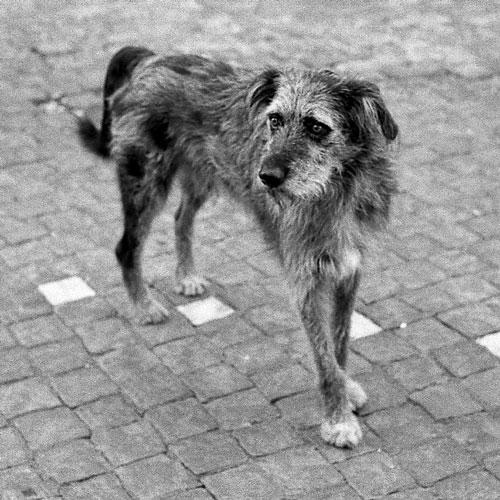
Mountain said the number of stray animals in the New Orleans area could be in the millions, and he noted that the goal was to retrieve free-roaming dogs "before they start forming packs, their version of looters."

New Orleans isn't the only focus of animal advocates: Noah's Wish, a Placerville, Calif.-based group that helps rescue animals during disasters, has established a makeshift shelter in Slidell, La.

"People are absolutely desperate," says volunteer and spokeswoman Patricia Jones. "I got an e-mail from a 10-year-old saying, 'My gecko is in my bedroom - can you please feed him crickets?'"

Among the animal groups accepting Hurricane Katrina monetary donations:

Noah's Wish noahswish.org, 530-622-9313.

American Humane. www.americanhumane.org, 303-792-9900.

American Society for the Prevention of Cruelty to Animals 2005 Disaster Relief Fund. www.aspca.org/disaster, 866-275-3923.

American Veterinary Medical Association Veterinary Medical Assistance Teams. www.avmf.org, 800-248-2862 ext. 6689.

Best Friends Animal Society Hurricane Relief Fund. www.bestfriends.org, 435-644-2001 ext. 104.

Humane Society of the United States Disaster Animal Response Team. www.hsus.org, 800-HUMANE-1.

Louisiana Society for the Prevention of Cruelty to Animals. www.la-spca.org.

Louisiana Veterinary Medical Association. www.lvma.org, 800-524-2996.

United Animal Nations. www.uan.org, 916-429-2457.


Sunday, September 04, 2005

TWO TURNTABLES AND NO MICROPHONE


QUESTION OF THE HOLIDAY WEEKEND:

Why do people -- men -- bring mix CD's with uneven sound levels and dead air between songs to a party, and, upon arrival, make a beeline for the host, pull it from their pocket (it's never in a case or envelope), brandish it about and demand that it be played? Why do they then add insult to injury by hovering over the appointed DJ, who has provided and schlepped the sound system, and claiming, "I'm a deejay?" as if that somehow makes it OK? Because we all know they're deejays for one, at Club Mi Casa es Mi SUV. Of course there is exactly ONE GENRE of music on said CD -- usually songs no one has heard, or would want to hear again -- because why would anyone at an exquisitely set and well-appointed outdoor party crave variety? This has happened at so many parties -- and at so many of my own DJ gigs way-back-when -- that some brilliant young S & A grad student should do their dissertation on the topic. Fortunately the appointed DJ (not I) was diplomatic enough to allow some songs to be played (much to the delight of three people in the alley) and then segued to his foolproof 70's funk mix, which got the whole place moving -- even the sleek ladies whom Larry David Midwest dubbed "soap opera women."*


That said, it was somehow OK for me (DJ Spinsta Caca) to spring mine own painstakingly-crafted party mix (featuring even levels and mostly-exquisite segues) on Gridlife just hours before the fete, and harass him mercilessly with pleas that it be played....**

PERSPECTIVE (SORT OF)

Now that that rant is finished....I just read a thoughtful and loaded piece about New Orleans' history of flooding and government largesse in today's NYT:


September 4, 2005
The Prologue, and Maybe the Coda
By JOHN M. BARRY

I CALLED my home in New Orleans Wednesday to listen to the phone ring. I didn't call for messages, knowing that without power the answering machine had not taken any. I called to connect to my home. No neighbors remained to talk to. The few who had remained through the storm and through the first part of the week had finally gone. Listening to the ring, imagining it echoing through the silent house, its sound waves caressing so much that I loved and so much of my life, I was reluctant to hang up. It seemed as if hanging up meant abandoning my home and my city, as if I were holding onto it, and hanging up meant letting it all ... go.

What we are seeing is well beyond the worst natural disaster in American history. We will never know the exact death toll, the direct monetary loss will easily exceed that of any other disaster, and the entire population of the New Orleans metropolitan area and much of the Gulf Coast will soon be scattered across much of the country.

We may also be seeing the virtual destruction of one of the world's great cities as well. In a way, though, that seems the least of the thing, and less important each day. The initial inability of local or national government to respond, our own impotence and rage over events, and the worst of it, the rapid descent into chaos - more like Baghdad or Mogadishu than an American city - each one of these things may be more disturbing than the heart-song of the loss.

How did it come to this, and where does it go?

Geology and economics answer part of the first question.

All the land in the Mississippi River's flood plain from Cape Girardeau, Mo., to the Gulf of Mexico - more land than Massachusetts, Connecticut, Rhode Island, New Hampshire and Vermont combined - was created by the deposit of sediment by the river.

New Orleans itself was located at a point particularly conducive to commerce, and the first areas settled were relatively high ground (and remain dry today). Levees, which go back to the Tigris and Euphrates, had long been in use to control floods, and also helped guarantee a shipping channel; until 1928 virtually all federal money for levees was justified by the river's role in interstate commerce.

This effort was, in effect, to channel the river, and it has largely succeeded. Levees have contained all floods on the lower Mississippi - which routinely carries triple the amount of water in the river at St. Louis - since 1927. Then canals and pipelines were cut through the marsh below New Orleans to make shipping and energy production more efficient. New Orleans benefited from all this, but not as much as Midwest agriculture exporters or steel importers, which enjoyed cheaper freight, or the entire nation, which enjoyed the oil and gas pumped out of the gulf.

But only south Louisiana has suffered from the trade-offs. No floods meant that the river no longer replenished the land each year with silt, so south Louisiana parishes began to sink. And the canals cutting through the marsh accelerated erosion. The result: the equivalent of the island of Manhattan disappears every 10 months. That explains the physical vulnerability of south Louisiana today. It does not answer the most disturbing question: How has New Orleans come so close to collapse? For what we are witnessing bears no resemblance to what has happened in the past.

Before this, the flood on the Mississippi River in 1927 was doubtless the most terrible American disaster. In one obvious way, it eerily foreshadowed today's. For one thing, New Orleans officials loudly warned that a disaster was waiting to happen, and condemned Washington for ignoring them, just as last week's devastation was widely predicted.

The scope of the 1927 devastation also resembled today's. No one knows the death toll. The official government figures said 500, but one disaster expert said more than 1,000 in Mississippi alone. The homes of roughly one million people, nearly 1 percent of the entire population of the country, were flooded. The Red Cross fed 667,000 people for months, some for a year; 325,000 lived in tents, some sharing an eight-foot-wide levee crown with cattle, hogs and mules, with the river on one side and the flood on the other.

Even amid that horror, as in other natural disasters, people responded by bonding together. Goodness emerged. The fault lines of race and class melted away with the levees, and the commonality of the burden that victims shared created a sense of common humanity. But as days dragged into weeks, honor and money collided, white and black collided, regional and national power structures collided. The collisions cracked open the fault lines and caused America to stagger and shift as well.

As a result, Americans rethought the responsibility the federal government had toward individual citizens. The government had felt little such responsibility. In 1905, a yellow fever epidemic struck New Orleans. Scientists knew how to fight yellow fever, and the Army had completely eliminated the disease from Havana. Yet, before the Public Health Service would come to New Orleans to save the lives of Americans, the city had to raise $250,000, in advance, to cover the expenses. Americans accepted this.

But in 1927, even after the expansion of government during the Progressive Era and World War I, not a single federal dollar went to feed, clothe or shelter any of the 667,000 being fed by the Red Cross. (Indeed, the Army even demanded reimbursement from the Red Cross for use of its field kitchens and tents.) Americans did not accept this. Overwhelmingly they expressed a new belief that the government should help the flood victims and, by implication, other individuals in distress through no fault of their own. This represented an enormous shift in public attitudes.

The flood left other legacies almost as significant. It sent hundreds of thousands of blacks out of the flooded territory to Chicago, Detroit and Los Angeles. Enormous positive publicity created the presidential candidacy and guaranteed the election of Secretary of Commerce Herbert Hoover, who had been in charge of the rescue effort.

Yet his subsequent betrayal of the national African-American leadership and African-American refugees snapped the emotional bond black voters felt for the G.O.P., the party that freed the slaves, beginning the shift to the Democratic Party.

The flood also left a legacy directly relevant to today. It led to the passage of the 1928 Flood Control Act, which was the most expensive bill Congress had ever passed, exceeded only by the cost of the Civil War and World War I. That same bill set a precedent redefining the relationship between the federal and state governments, and for the first time gave the federal government full responsibility for flood control along the lower Mississippi and many tributaries.Today we face a disaster even greater than the one in 1927, and for all the similarities a single difference between now and not only 1927 but the other natural disasters is most striking.

That sense of common humanity, of a shared burden, did not dominate the immediate aftermath of Katrina. Why not?

It is understandable that when no market or restaurant is open to sell food and water, people break into them to survive. As things escalate, some people go the next step and become looters. Once order begins to break down it is difficult to redraw the line. But how to comprehend the hell, the breakdown of society, the snipers shooting at hospitals, shooting at helicopters trying to evacuate people?

Yet perhaps this explains it: This disaster was not a common burden.

Many people who stayed in New Orleans chose to. But many, and probably most, of those who remained either paid too little attention to the warnings or would have gotten out if they could.

Once the levee gave way things deteriorated instantly. Communications between rescue personnel, between government officials became almost impossible. Things soon became so bad a senior aide to the mayor broke into an Office Depot to commandeer communication and computer equipment to rebuild a command post when water knocked out the original one.

The population, without power, had no information from television or radio.

Troops are finally taking control of what may never again be called the Big Easy. Midwest farm exports still need cheap freight to compete in the world market, and the nation still needs the oil and gas from the gulf; moving that infrastructure and building new refineries would cost billions and take years. If - a major if - the existing plan to reverse the coastal erosion will work, then it and the cost of protecting the city against hurricanes may well pass even a cost-benefit test.

But past the question of rebuilding this city, my home, will this disaster leave an imprint like the 1927 flood? Will it cause the world to change the way it engages the environment? Will it cause Americans to think about the role of government and this newly seething underclass?

I don't know. On Thursday, I tried to call my house once again, to listen to the phone ring. I could not. The phone no longer works.

John M. Barry of the Center for Bioenvironmental Research at Tulane and Xavier Universities is the author of"Rising Tide," about the 1927 Mississippi flood, and"The Great Influenza."


Copyright 2005 The New York Times Company


----------------------

*They moved, but their cans did not.
**It was very well-received. Or so it seemed.

Friday, September 02, 2005

REASONS TO VOTE, PART I


Radar View of Hurricane Katrina (Reuters)


Molly Ivins' column yesterday (seen below) damns the powers-that-be for the disaster in New Orleans, and is currently the Chicago Tribune's most e-mailed article.... which means that perhaps there is hope for 'Merica after all.

"WHY NEW ORLEANS IS IN DEEP WATER

Molly Ivins, Creators Syndicate
Published September 1, 2005


AUSTIN, Texas -- Like many of you who love New Orleans, I find myself taking short mental walks there today, turning a familiar corner, glimpsing a favorite scene, square or vista. And worrying about the beloved friends and the city, and how they are now.

To use a fine Southern word, it's tacky to start playing the blame game before the dead are even counted. It is not too soon, however, to make a point that needs to be hammered home again and again, and that is that government policies have real consequences in people's lives.

This is not "just politics" or blaming for political advantage. This is about the real consequences of what governments do and do not do about their responsibilities. And about who winds up paying the price for those policies.

This is a column for everyone in the path of Hurricane Katrina who ever said, "I'm sorry, I'm just not interested in politics," or, "There's nothing I can do about it," or, "Eh, they're all crooks anyway."

Nothing to do with me, nothing to do with my life, nothing I can do about any of it. Look around you this morning. I suppose the National Rifle Association would argue, "Government policies don't kill people, hurricanes kill people." Actually, hurricanes plus government policies kill people.

One of the main reasons New Orleans is so vulnerable to hurricanes is the gradual disappearance of the wetlands on the Gulf Coast that once stood as a natural buffer between the city and storms coming in from the water. The disappearance of those wetlands does not have the name of a political party or a particular administration attached to it. No one wants to play, "The Democrats did it," or, "It's all Reagan's fault." Many environmentalists will tell you more than a century's interference with the natural flow of the Mississippi is the root cause of the problem, cutting off the movement of alluvial soil to the river's delta.

But in addition to long-range consequences of long-term policies like letting the Corps of Engineers try to build a better river than God, there are real short-term consequences, as well. It is a fact that the Clinton administration set some tough policies on wetlands, and it is a fact that the Bush administration repealed those policies--ordering federal agencies to stop protecting as many as 20 million acres of wetlands.

Last year, four environmental groups cooperated on a joint report showing the Bush administration's policies had allowed developers to drain thousands of acres of wetlands.

Does this mean we should blame President Bush for the fact that New Orleans is underwater? No, but it means we can blame Bush when a Category 3 or Category 2 hurricane puts New Orleans under. At this point, it is a matter of making a bad situation worse, of failing to observe the First Rule of Holes (when you're in one, stop digging).

Had a storm the size of Katrina just had the grace to hold off for a while, it's quite likely no one would even remember what the Bush administration did two months ago. The national press corps has the attention span of a gnat, and trying to get anyone in Washington to remember longer than a year ago is like asking them what happened in Iznik, Turkey, in A.D. 325.

Just plain political bad luck that, in June, Bush took his little ax and chopped $71.2 million from the budget of the New Orleans Corps of Engineers, a 44 percent reduction. As was reported in New Orleans CityBusiness at the time, that meant "major hurricane and flood projects will not be awarded to local engineering firms. Also, a study to determine ways to protect the region from a Category 5 hurricane has been shelved for now."

The commander of the corps' New Orleans district also immediately instituted a hiring freeze and canceled the annual corps picnic.

Our friends at the Center for American Progress note the Office of Technology Assessment used to produce forward-thinking plans such as "Floods: A National Policy Concern" and "A Framework for Flood Hazards Management." Unfortunately, the office was targeted by Newt Gingrich and the Republican right, and gutted years ago.

In fact, there is now a governmentwide movement away from basing policy on science, expertise and professionalism, and in favor of choices based on ideology. If you're wondering what the ideological position on flood management might be, look at the pictures of New Orleans--it seems to consist of gutting the programs that do anything.

Unfortunately, the war in Iraq is directly related to the devastation left by the hurricane. About 35 percent of Louisiana's National Guard is now serving in Iraq, where four out of every 10 soldiers are guardsmen. Recruiting for the Guard is also down significantly because people are afraid of being sent to Iraq if they join, leaving the Guard even more short-handed.

The Louisiana National Guard also notes that dozens of its high-water vehicles, Humvees, refuelers and generators have also been sent abroad. (I hate to be picky, but why do they need high-water vehicles in Iraq?)

This, in turn, goes back to the original policy decision to go into Iraq without enough soldiers and the subsequent failure to admit that mistake and to rectify it by instituting a draft.

The levees of New Orleans, two of which are now broken and flooding the city, were also victims of Iraq war spending. Walter Maestri, emergency management chief for Jefferson Parish, said on June 8, 2004, "It appears that the money has been moved in the president's budget to handle homeland security and the war in Iraq."

This, friends, is why we need to pay attention to government policies, not political personalities, and to know whereon we vote. It is about our lives.

----------

Molly Ivins is a syndicated columnist based in Washington. E-mail: info@creators.com "

Copyright © 2005, Chicago Tribune


(AP photo by Bill Haber)
DIRTY DIRTY DIRTY


This giant color, half-page photo (and caption) appeared above-the-fold on the cover of the Chicago Tribune's newish At Play section yesterday. It accompanied a story about the great food those high school kids are sucking down at the games these days.


"The food's the real action at high school football games. At Neuqua Valley High School in Naperville, tailgating is in, with Danielle Nasciopinto, 16, munching on a grilled dog."


The photographer of course is a man -- Bill Hogan -- yet the section's editor appears to be a woman (Linda Bergstrom).

In case you're wondering, the age of consent in Illinois is 17.

Wednesday, August 31, 2005

UNA FAMILIA LEJANA

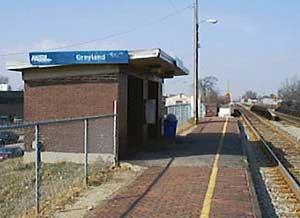
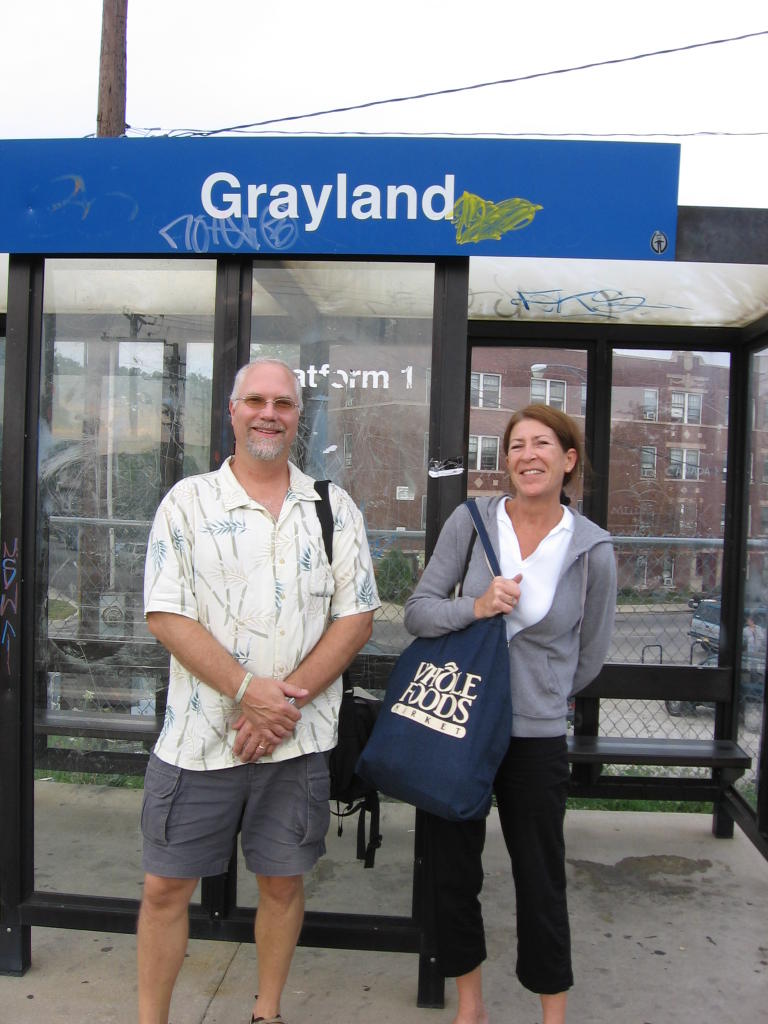
The Fambly came in to visit via the train, and I picked them up at a desolate Northwest side station called Grayland.*

There's a very scary-looking bar next door and new townhomes across the street; typical Chicago juxtaposition. We got out of there fast and headed to Gridlife's to pick up my new digital camera. It's a Canon PowerShot A510 recommended by the Hex. Apprently it works. (see plates below).

We ate salad and falafel sandwiches al fresco at Andie's in Andersonville (they have the same name, sort of, but the former is Lebanese, while the latter is Swedish) before visiting the Middle Eastern Bakery and the Swedish deli. Then we drove to the Golden Pacific Market --- where among the other Asian items they sell a Japanese can of soda with an aluminum top and clear plastic body.


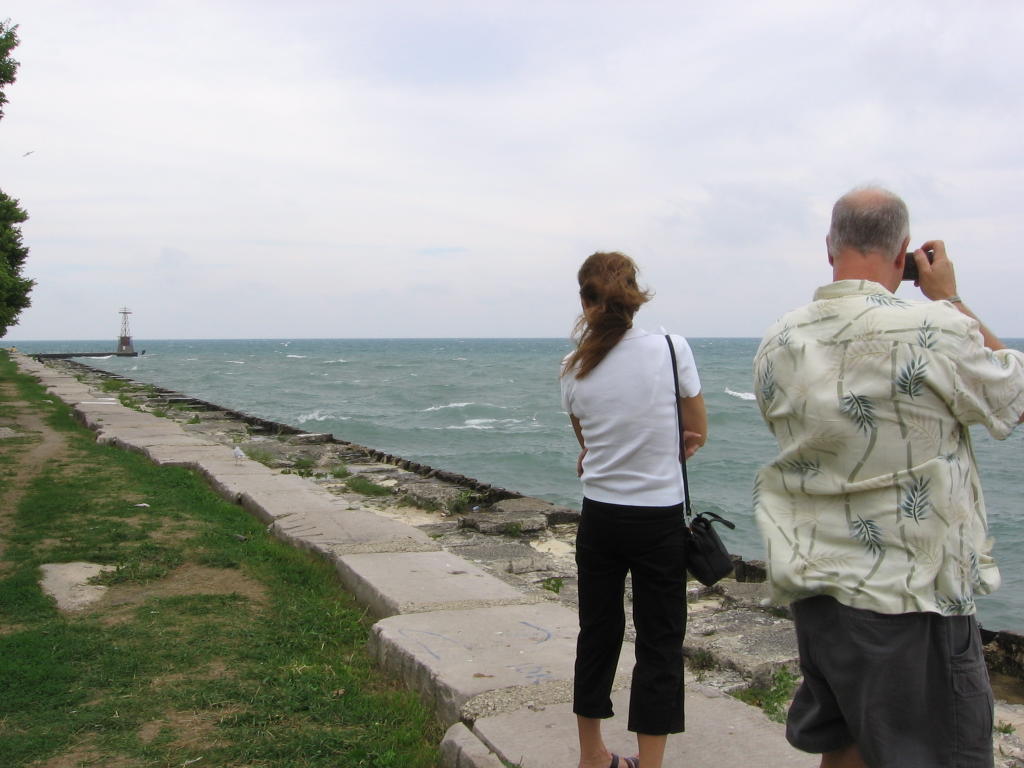
We also stopped at Lake Michigan -- which boasted whitecaps and seagulls. We were also entertained watching the men cruise each other in the Montrose Harbor parking lot.

On the way home we drove past Joan Cusack's house. We stopped and stalked a bit -- saw two girls get out of a minivan and ring the bell.

Even more fun, though, was waiting for the train back to the Outlying Area. Many express trains were passing by, so we placed a quarter on the track to see what would happen (this is something we'd all seen in movies but never experienced first hand -- in my case because I've never been a 10-year-old boy... not that I know of anyway). We jumped as the first metal wheel ran over the coin and made a loud clang.


When the train was gone, we could see the round mark where the quarter had been. We searched and searched through the rocks. And then I found it. The quarter was now a smooth oval with copper-colored edges. We held it up to the light and saw, very faintly, the words "live free or die." Leave it to us to smash a New Hampshire coin on the tracks (now *there's* a Bob Dylan album).


-------------------------

*"Grayland, which was opened for settlement in 1874, extended West from Kostner to Cicero Avenue, between Irving Park and Addison. Subdivided by John Gray, the first Republican sheriff of Cook County, on a portion of his extensive farm, it grew around the Grayland station of the Milwaukee Road Railroad, which is still in active use today. Gray’s first home built in 1856 at 4362 W. Grace survives today in a remarkable state of preservation and is the oldest house in Irving Park. Gray later built a lavish mansion on the northwest corner of Milwaukee and Lowell to reflect his newfound wealth and it was a community showplace. Indoor plumbing with gold fixtures, exotic woods and expensive marbles highlighted his home. It was razed around the year 1915." (From Wikipedia)

Friday, August 26, 2005


LESSONS LEARNT

When taking an aeroplane, even if you are not checking luggage, you must check in at least 32 minutes prior to takeoff. Not 31 minutes, and definitely not 22.

If you check in late, you do not have to pay $100 to be booked on the next flight. You can fly standby for free. But first you must find out if there are empty seats.

If they offer you a free ticket in exchange for giving up your seat / flying later, and you are alone and aren't on a schedule and don't have anyone waiting for you and there's a good DVD in your laptop, calculate the value of the ticket vs. the amount of time you'll be delayed (for example, 3 hours for a $300 ticket comes out to $100/hour). Do this before automatically hitting the "no" button.

To get an aisle seat on a full flight, state your case and give your ticket to the agent at the gate. If in India, complain of "loose motions."

The airlines are strictly enforcing weight limits for checked baggage; each piece must not weigh more than 50 pounds. At O'Hare bags must be checked at least 45 minutes prior to departure.


The secret to cheap and plentiful sangria is this: Use Carlo Rossi sangria-flavored gallon wine. Chill in a pitcher overnight with in-season fruit (plums, peaches, strawberries, mangos, etc.) + one orange + one cinnamon stick. You may also add brandy, rum, sugar or fruit juice. Lemons, however, leave a bad aftertaste.


No matter how many ferrous sulfate tablets you take and kidney beans you heat up in the iron skillet, drinking caffeine before giving blood can lower your hemoglobin level to the point where you flunk the iron test and are ineligible to donate (12.5 is the cutoff).

If you always pay your credit card bill on time and in full and get assessed a late fee ($39) and finance charge ($28.84) and revolving finance charge ($15.68), it will take two phone calls to get the fees removed from your bill.


If you have a check made out to you in pounds sterling (versus dollars) you must make the deposit in person.


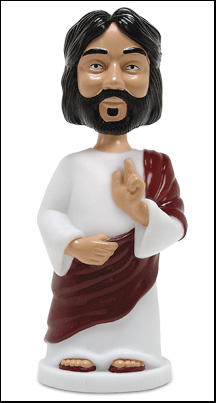
When you stare at the four dots for 90 seconds and then look up with your eyes closed you will see nothing. The second time you try it you will see Cartman from South Park. Then Jeebus will appear.


Dunkin' Donuts' "Get $10 off a $20 purchase at Office Depot" coupon really works and is good through the end of August. All you need is the coupon and a receipt for any DD item. If you pay cash at OD, you can do it again and again.

No matter how many times you tell them not to, your impatient neighbors will persist in putting your wet laundry in the dryer and shrinking all your clothes beyond recognition.


Ray and Charles Eames were not brothers but wife and husband (in the famous photo, Ray drives the motorcycle; Charles was the passenger).

41 is better than 40 (so far).

The maid of honor's duties include planning the shower and bachelorette party.

Home Depot has a gift registry. PetSmart does not.

One day the Bad Men will rifle through your car and steal all the change from your ashtray. Two weeks later they will find an empty ashtray and instead steal your gum.

Sometimes a massage works better than a chiropractic adjustment


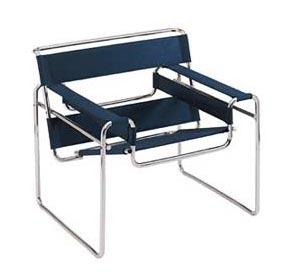
Just because the Wassily chair is half-price doesn't mean you should buy it.

Big waves can crush and hurt you -- even if you're on a boogie board.

It is indeed 10 degrees hotter in the valley.

Yogaworks is a chain. So is Exhale.

Produce is better in Cali, yet it's somehow more expensive.

Santa Monica has more tolerant homeless laws than Venice, which is part of LA. If you must sleep rough on the beach, head north towards SM. Sleep under a lifeguard station so the sand groomers don't run you over (apparently this is a sport in Venice).


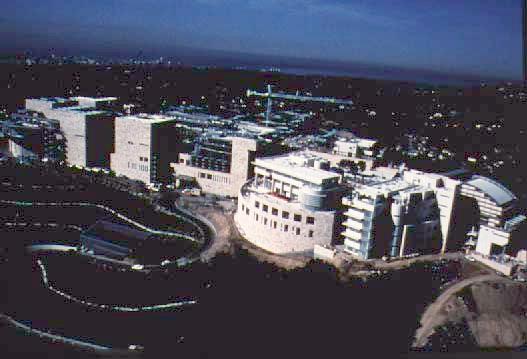
Getty Center architect Richard Meier and Getty Center garden designer Robert Irwin loathe each other (their designs are at odds; Meier wanted to maximize the institution's stunning view, which Irwin essentially blocked in order to draw more attention to his gardens). It's all documented in the video Concert of Wills: The Making of the Getty Center.


Use blue ink when signing important documents (so you can tell which is the original and which is the copy).


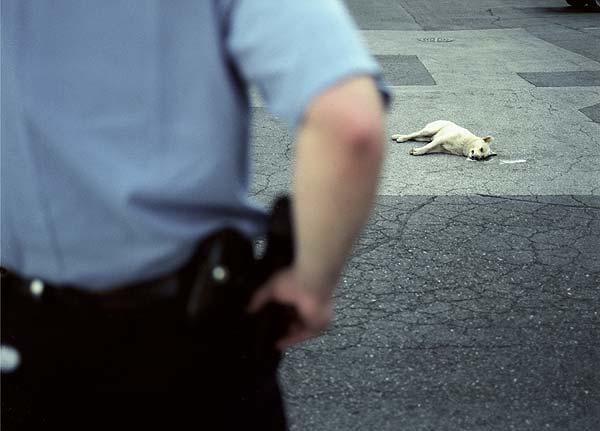
Occasionally your first human contact of the day will take place after you run through a stop sign on your bicycle at 5:45AM. You will hear a Chicago cop sneer in that thick Chicago snarl, "You better get outta here, quick."


The Venice (CA) canals do exist.


Holidays end.

Monday, August 22, 2005

NOBODY WALKS IN L.A.

And apparently no one wants to drive Inland when they live near the water (ie Santa Monica/Venice). Or vice-versa. Nonetheless we took a drive and got to drink the best iced coffee ever and eat figs right off the tree at the Studio City (ie; THE VALLEY) home of LoTus, Allen and Sunny Rae, who happen to live right down the street from the Brady Bunch House. They also live near avid (annoying?) environmentalist Ed Begley, Jr, whose Begley's Best household cleaner is sold at the local Food Whole and was gifted to me by LoTus. I'd take a picture of it, but camera seems to have expired. 'Twas a lovely visit with them, but far too short indeed.

My trip started and ended at the beach of course. The one in Santa Monica (at right) was deserted; Venice was another story (Why is it that the Europeans must locate their encampments ON TOP OF the nearest 'mericans? And why are the British SO EFFING LOUD?). The Hex surfed and I got to ride the longboard on my belly. Lots of fun; you feel like you're flying. I had less luck with the 70's boogie board on my last day, when I got crushed by a wave and was *not* sittin' on top of the world. The neck still hurts from that.

Near Venice Beach, where Gruff Tay-mus lives, and near the Santa Monica Beach where we stayed, it was in the 70's during the day and 60's at night. That meant hot tea, socks and comforter were in order each evening. NOW I get why people live there. Apparently you don't have to suffer the summer if you live near the water. And yet you're attached to a big city. DUH. If only one had $100 for each time someone said, "You have to move here," one would have a down payment. Instead one had a drink, and one's yoga practice has gone to hell (one nearly fainted after teaching, practicing and giving blood today. Borderline anaemics cannot have coffee before donating or they flunk the iron test, so when I finally made it to Dunkin' Donuts for a coconut iced coffee after my 1PM donation, I was extremely exhausted and lightheaded. I started to lose it, and had to put my head between my legs).

Speaking of tails between legs.... there were two chihuahuas, Louie and Ray, at the place where we stayed. One afternoon, while the Hex was picking up Tay-mus at the hospital (back surgery) I did some yoga. Partway through the primary series I left the mat for a moment (distracted? I'd say so) and saw both dogs hovering near my setup. Two seconds later Ray was sitting down, paws up by his ears, dragging his dirty anus across my mat. "Scooting," as they call it. "Streaking," as I call it. He left a foot-long brown streak (slightly crooked) RIGHT IN THE MIDDLE OF MY MAT, and seemed to think nothing of it. I WAS HORRIFIED. Too horrified to take a photo. Thankfully the house was stocked with disinfectant cleaner. I told Munkin the story last night, and she hit it on the head: "He needs to have his anal sacs popped."

Each night the dogs, the Hex and I wound down by watching part of Motown and B-Boys, or, as the rest of the world calls it, Dogtown and Z-Boys. That's the documentary about the scrappy 70's skateboarders who hung out near where we were staying and pioneered half-pipe, bowl and pool riding (gettin' vertical) etc. They were all over the magazines I used to devour while growing up in flat McHenry and on the posters on my walls. (I had a letter published in Skateboarder back in jr. high...Mr. Peralta should have interviewed ME instead of fat-neck poseur Henry Rollins, who went on and on about the impact it had on him growing up in DC. They also interviewed DC straight-edge scenester and Minor Threat frontman Ian MacKaye. Something tells me those kids were just not that into eschewing meat, booze and drugs).

And on Saturday we walked up the hill (with the dogs) to see the Eames case study house, which the Eames' designed and lived in until they died (in 1978 and 1988, on the exact same day). While trying to find the place, we saw another case study home that was being restored to its former glory. Can I just say -- NONE of the neighbors knew they were in the midst of architectural treasures. Maybe what they say about them Angelinos being shallow/vapid has some truth to it after all.

In any case, we had no appointment, no money, and no poo-bag. The nice lady let us have a look around anyway, and even gave the Hex a souvenir plastic turd-bag. (I hope to post photos one of these days -- had to use the Hex's camera, as mine had expired by then). Among the Eames' books was a copy of Gunter Grass' The Tin Drum, plus there were lots of things from India and Indonesia (apparently one's instinct to mix Subcontinental textiles with the ultramodern* is not the novel new idea one had thought). The house and studio were stunning (you could look in but not go in), as was their view of the ocean. I also learned, afterwords, that Charles and Ray were not brothers as I had assumed all these years, but husband and wife. Oops. NO WONDER they shared sleeping quarters.... Perhaps what they say about dem Chicagoans being unsophisticated has some truth to it after all....


--------


*One's living room is in keeping with the style of one's original (not reissued) fiberglass Eames rocking chair from childhood, which may be beat up but is still quite a looker.

Sunday, August 21, 2005

WALKING IN L.A. - AY

The camera is on the fritz so 41 photos will not be televised, at least not for awhile. Suffice to say I am Out of Town. The sea and the sun and temperatures in the evening so cool that one needs a sweater *and* a jacket. Nothing wrong with that in August. The Venice canals under a full moon, the man with the signs and roller skaters at Venice Beach, live unannoying big band music at Santa Monica Pier (again under a full moon). But very little topped yesterday, when The Hex and I ate fresh-picked figs with Lotus and Sunny Rae and Allen (apparently Jack Nicholson is reading his script) and later had a Scotch and listened to FYC with Tae-mus and San-D. A day that included seeing the Rembrandts at the Getty Center, gaping at the Brady Bunch house in Studio City, and driving past the Chateu Marmont and Viper Room.

Welcome to LA indeed.

Now, if only the endless loop of Beach Boys songs would stop playing in my head.

Thursday, August 11, 2005

AN UNCERTAIN AGE INDEED (Kali, You Go!*)


I received exactly two birthday cards this year (Plate One, left).


Apparently I am straddling the thin line between one of Tom Wolfe's smirking puberteens and perimenopausal scary lady with crazy hair and lopsided breasts. As with that whole virgin/whore dichotomy thrust on us by The Man, it seems there is no middle ground.

This makes me want to fall on my sword.

So does the aftermath of the weird dream I had about a brilliant professor I had (classes with) some 20-plus years ago (by the time I was a senior he'd fled our stuffy liberal arts school, where the professors were far more radical than the students; one time in class it was apparent that no one had done their work and he said "You've all been drinking and fucking all weekend" and told us to leave. They weren't really ready for that in Lake-not-Wake Forest, were they?). In any case, I awakened and remembered what promise I once had --yes, perhaps I couldda been a contenda -- and what a moron** and underacheiver*** I've become. So much for that dream of making groundbreaking films about youth subcultures. Maybe next lifetime.


Yes, time to fall on the sword.

Or at least try to learn how to wield the thing and become the castrating crone (in sensible shoes) I'm meant to be.


------------------------


*Kali-Yuga
In Hinduism, the last of the four yugas (ages) that make up one cycle of creation is the one we're in right now -- The Kali-Yuga. It's characterized by wickedness and disaster, and leads up to the destruction of this world (usually by men, at the expense of women) in preparation for a new creation and new cycle of yugas. Apparently The Man is going to get his soon, once Kali comes.**** She's the angry naked blue goddess with the crazy hair, sword, Gene Simmons tongue and string of skulls, who is usually depicted stomping her husband to death (oops!).

**I really did take great pleasure in watching Kristin-the-Famous-Bugeyed-Yoga-Teacher say "shit" and "fuck" (bleeped out of course) and drink, at one sitting: red wine, a martini and coffee -- on tonight's final episode of Hooking Up.

***No insurance, no mortgage, no Relationship, no five-year Plan, not a single lux-ur-ee. Footloose and fancy-free. No wonder I keep attracting guys like me.

****My mother, who was always ahead of her time and subscribed to Ms. from day one (I'm more of a Bitch girl myself, if you hadn't guessed), loved that bumper sticker; "God is Coming -- and is She Pissed!" NOW I finally get it.

Friday, August 05, 2005

PUH-THETIC...


...are the legions who endlessly extoll the mildly entertaining antics of their children/cats/rice cookers, talk excitedly about Amy from Hooking Up as if she's a close friend, and/or post amateurish E-photos of sunsets, for cryin out loud, on their largely unread blogs. Kind of like how they let anyone who can, have kids.

Pathetic.


Not that you can actually see the sun or anything. But this is a rare site indeed, snapped from the dismal grey back porch of a noisy* courtyard building located on a gritty four-lane speedway where they get really, really mad and sometimes even rear-end you if you dare slow down to park.


--------------------------


*Have I not mentioned Neck Tattoo? Suffice to say I now have a neighbor with a neck tattoo that may or may not have something to do with Folks / People**. He lives below Jenny Whatever, whom I've not seen since that cool June morn when I went onto the dismal grey back porch to snatch some yoga bottoms off the clothesline, wearing just a t-shirt and (matching) thong, and ran into J-Whatever, who was just trying to have a nice quiet smoke here thankyouverymuch, and shrieked, and ran inside, and slammed the door. Hard.

**A Latin King tried to pick me up at a party I attended with AWOL Jack last winter. He was impressed by my knowledge that the down-pitchfork*** he sported meant "people." He even showed me their hand-signal.


***Apparently Grant Wood's famous American Gothic, on display at the Art Institute of Chicago since 1930, continues to inspire the locals.

Thursday, August 04, 2005

BOSTON REDUX


In which The Author chronicles her triumphant return to Chowdaville


The "T" (the sign for which makes me think of a big ol' blowdryer). "S" (for Slow) would be more apt. But you have to love a city that names a major train station "Alewife."


The Holocaust Memorial (someone has been very busy scraping the words off the stone and glass)


Looking up @ Holocaust Memorial, which is engraved with all the numbers of the dead.


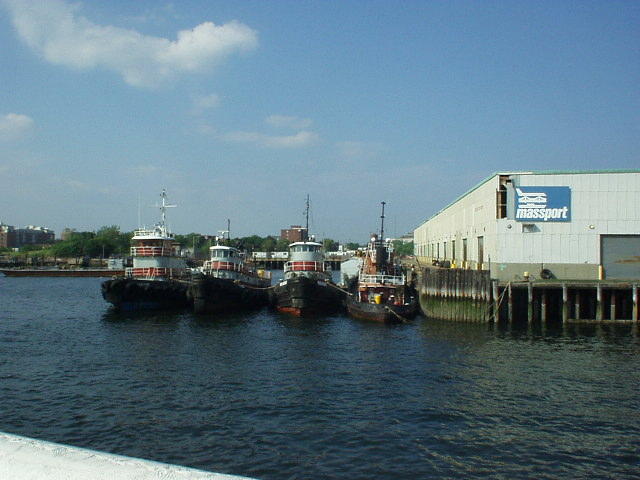
Geriatric tug conference at Boston Harbor


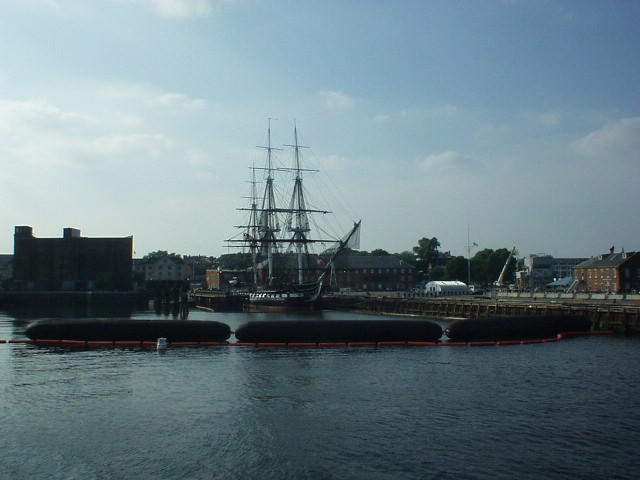
Boston Habba II (crooked version)as seen from our tour boat


Some intrepid frigate. Sposed to be good for ya.


An unworthy depiction of Beantown's stunning new bridge (part of the frightful ongoing nightmare called The Big Dig, it's built to resemble Bunker Hill -- which is out of frame, to the right)


A view from the Charles River bike path (which we rode all the way down to the Science Museum, after stopping in Cambridge for the Vegan Pizza)


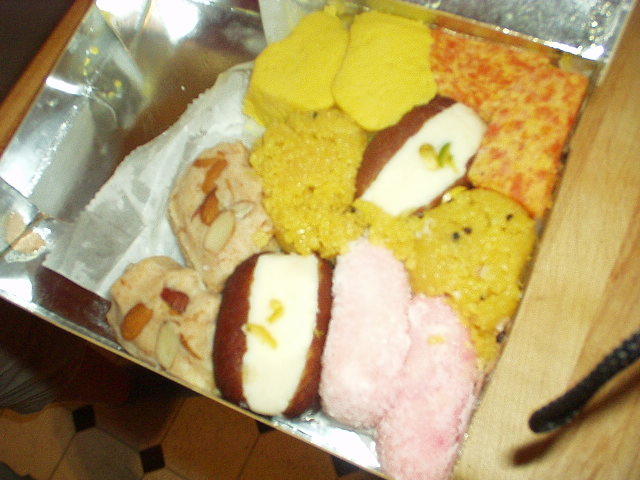
What Indian sweets look like after 1.5 hours on an aeroplane. Imagine how they must look when they're on drugs.


My gracious hosts + our new friend Sangria


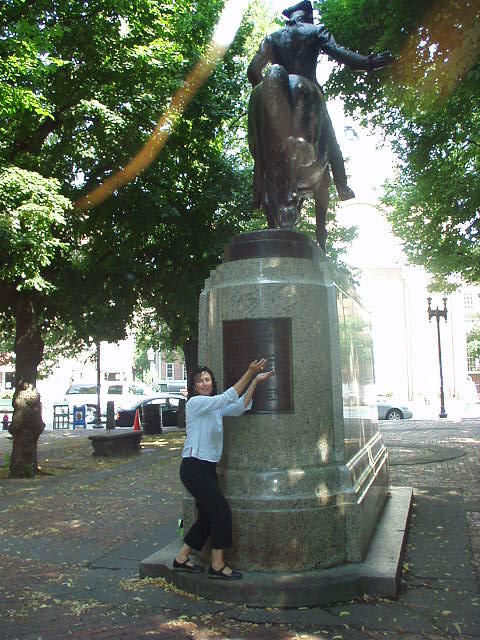
Wickey catching casuals from Paul Revere's mysterious mount

Sunday, July 31, 2005

THE VIGOROUS HUG OF NEPTUNE
CRANE BEACH, MA
...in which The Author really does sink down into warm, soft sand during Savasana.


Thursday, July 28, 2005


TIRED AND FIT 2B TIED*

Last year on my birthday it was cool and rainy, and after a bike ride and over pizza my then -companion asked me to tell him the difference between fiction and nonfiction, ouch. Red flags, anyone? I have several to spare. He's getting married, you know. For the third time.

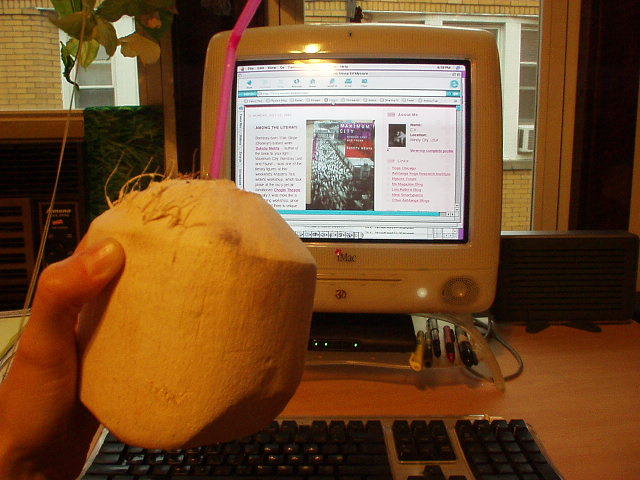
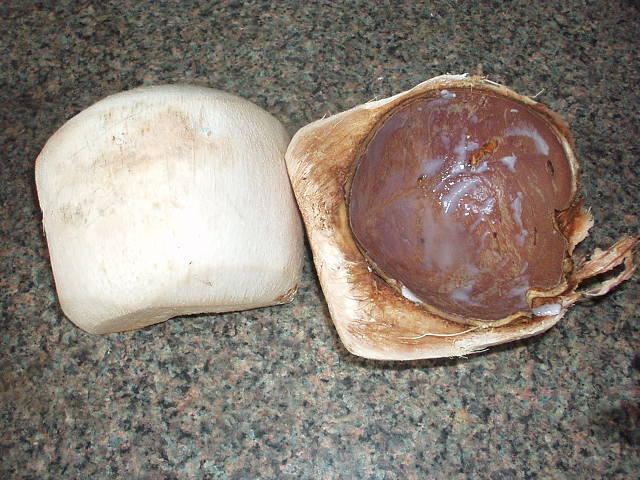
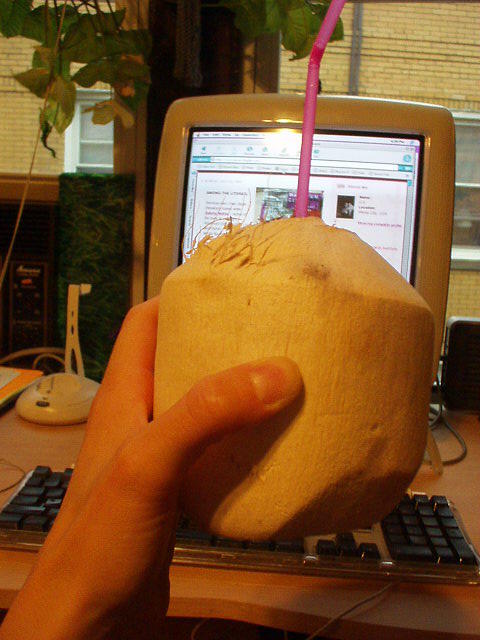
This year the day dawned hot and humid and my naive self still entertained some hopes of canoeing on the Chicago River that afternoon. I greeted the morning by watching the cat disappear while I drilled a hole in a chilled tender Thai coconut picked up for just $.99 at the Golden Pacific Market.** After slurping the juice through a straw I somehow managed to hack the thing apart (this takes some skill, esp. when every knife you own is dull) and slurp down the tender insides. I'm still not composting, and it felt very wrong to put the whole thing in the garbage when in India they let them dry and use the fiber (coir) to make rugs and other items. But, I thought, It's my birthday, and I'll act like a fat spoiled 'Merican even if'n I don't want to.***

Then I took the bike up to YogaNow - where they sang happy birthday! I had a difficult and painful practice -- someone has replaced my body with that of some 41-year-old -- with Henry the Punk. Afterwards we enjoyed a lovely breakfast at m. henry (hey! a theme!). Lovely despite the fact that in spite of my glowing recommendation in this month's Fancy Magazine we were seated not in the bright and cheerful front area but in the back, near the kitchen. Nonetheless the food was excellent and plentiful as usual (FAT BLOG ALERT! Today the health club scale showed that I somehow gained FIVE POUNDS over the past week. When I just bought SIZE THREE capris. Could it have been the millions of salty corn chips consumed with Gridlife on Saturday? The two pieces of chocolate cake at the workshop on Sunday? The pina colada-in-a-martini-glass followed by a carrot cake chaser on Tuesday? Or are the scales and sizing all wrong? You make the call).

Then I rode the bike through the humidity and back to my hot home (seven of my windows face south, and I'm on the top floor) and dealt with work and laundry and phone calls and a bath, and took a long summer's nap in front of the AC. I awakened crabby and disoriented and was consuming some chilled chai and half of a Take 5 bar (a possible contributing factor to my new phatness?) in an attempt to elevate my mood when an editor called... and offered me a lucrative writing gig! The mood lifted somewhat. Then the doorbell rang. It was a man with flowers from the Hex (yes, that's them above), which were both unexpected and very welcome. And fragrant. Still very fragrant in fact. Then my long-lost friend Wickey called; she recently returned to New Hampshire after a long stint in Dublin -- and I get to see her this weekend! The last time I was in her company was in 2004, at Queen Victoria's house in Germany, where I stopped on the way home from India, when we visited some Hitler museum (we *really* know how to have a good time). Then Queen E. called; she's in Beantown and very keen to discuss The Bollywood Fillums, and will pick me up at the airport Friday!
While I was chatting on the phone the wind started blowing like crazy from the north and it was cool and such a delight after Sunday's 102-degree (felt like 120) nightmare. So I opened every window in the apartment (nine total) and let the cross-breeze flow and forgot entirely about the laundry on the line. And then it started to rain! Finally, the monsoon came (we're in the midst of a terrible drought) and it seemed like things might turn out OK after all. And then it was time to stop wringing my hands and wring out my clothes and head up north to charming Andersonville to meet the posse for dinner; much laughter and a much mellower birthday than last year's ill-fated 40 in 04 fete. Less is most definitely more, now that we're in OUR EFFING FORTIES.


--------------

*sounds like the title for a Huey Lewis comeback single


**Golden Pacific also has the great prices on regular and tasty fried tofu (made across the street! very fresh!), jaggery, bean sprouts, canned bubble tea and a plethora of other items.


***Now there's a song